
The more they complained the less work they did. They soon realized that some of them worked, and got more money in front of everybody. Before we knew it, everybody wanted to work more so they could earn more. Even here, even if someone needs the money badly, — no matter what it is, whether it’s a funeral, whether it is sickness, we tell them to do something, whether to clean, but they must do it before we give them money.
ANYIETH D’WOL started the Roots Project. Last week, she had a conversation with BADRU MULUMBA:
Q. Why roots?
The name? Because we target grassroots people. We are also making traditional crafts. It is our cultural roots. It inspires us to grow and grow and grow – like roots do.
Q. That’s interesting because I thought it had its origin in Roots – the movie?
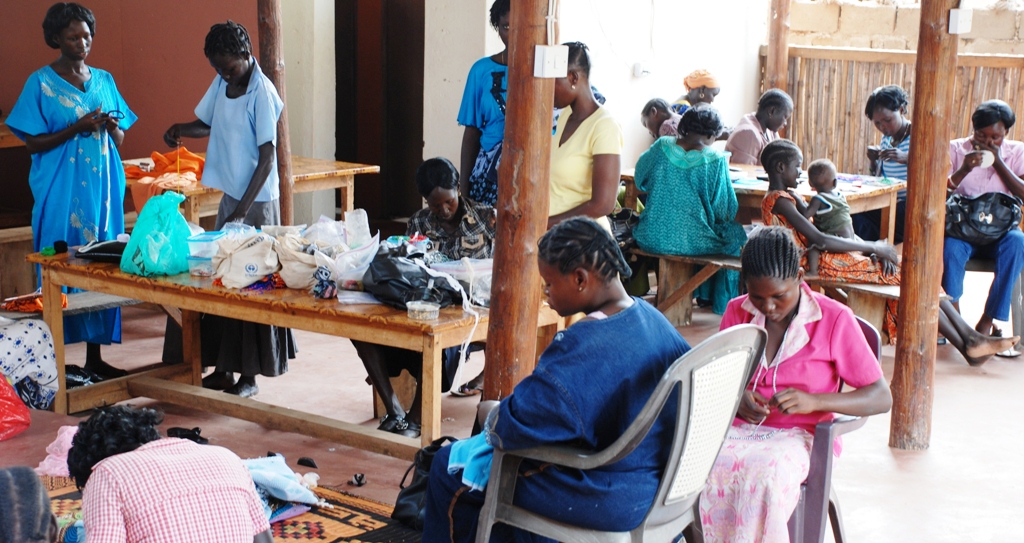
Not at all. I think Roots is a very interesting name. We wanted to call it another name, but we couldn’t think of any other. Roots is inclusive. It’s the beginning. Since we started Roots, it has been growing. It’s a socially and economically empowering organization. We give someone a job and then realize there are other issues that limit them. So we provide literacy and numeracy now. Some have health issues and we offer health education. We thought we could meet them only a few hours a day. But that way we couldn’t provide them with some skills, like, not to come to work drunk. That was an inspiration for starting the center. Now we have other artists, like painters, people who make T-shirts.
Q. Let’s go back to the roots – the foundation of everything. You are empowering women culturally, socially, economically. Which of these was critical to the formation of Roots?
It was social and economic empowerment. Culture was something I missed. I missed seeing what different tribes do in terms of adornment, in terms of crafts. The social drive came from work in human rights, HIV, the development fields. I realized that many problems we have are a result of people not having something to do. They are not engaged. It’s a first step to solving insecurity; it’s a first step to solving poverty.
Q. By the way, how many ethnicities are represented here?
We have Bari, Mundari, Lotuka, Toposa, Lopit, Balanda, Dinka, Nuer, Shilluk, Zande and a lot more.
Q. How did you manage to bring them together, yet in the countryside many don’t see eye to eye?
Start slowly. We started with Bari and Mundari. We found a little village and started working with them – Murle as well. We got the word out. It took time to convince people. But we are here; we are inclusive. The only time we ask about a tribe is to know how much a specific tribe to allocate to the center. We want every tribe included.
Q. Can such a project provide the answer to tribal fights across the entire country?
It’s very replicable. The war has made people move from place to place. There are inter-tribal marriages. We need to move beyond mingling as neighbors to mingling in the larger community. We have 16 tribes and many more to go. We also need to reach out to men. We have some in Bor making pipes, and we have men here making jewelry. And it is self-sustaining as long as we get the market.
Q. So what have you learned in the process?
Sometimes we have arguments and shouting but it’s just like anywhere else. We handle problems the traditional way. Everybody sits down and expresses themselves. The key word is respect. If people respect each other, there will not be a high level of conflict. Also, someone from one tribe learns what someone from another tribe makes, in terms of crafts. It brings people together.
Q. Some complain that people, because of decades of war, being always on the run and relying on aid, as Information Minister Barnaba Marial Benjamin told me today, are averse to work and are against manual jobs, such as sweeping, cleaning. How did you surmount this challenge?
Stand firm. When we first started, when we went to Koromura, in the beginning, you’d give them the beads and they would say lakin ana maindu grush bita sokoro. Ana mindu grush kida. Ana taban. (Loosely translated: I don’t have money for the work. I don’t have money here. I am tired). I would always say, Just finish it. Only when you finish it will I give you the money’. And we would pay immediately.
The more they complained the less work they did. They soon realized that some of them worked, and got more money, in front of everybody. Before we knew it, everybody wanted to work more so they could earn more. Even here, even if someone needs the money badly, — no matter what it is, whether it’s a funeral, whether it is sickness, we tell them to do something, whether to clean, but they must do it before we give them money.
Or, we give you money and it is deducted from your salary. It’s not just this giving because this giving is the root of our problems. People are not necessarily lazy; it’s just that they have been made lazy. And they don’t know how to start. And they have no confidence to say, I am going to do it and this is going to sustain me. Culturally, it’s not normal to work outside an office. When I was leaving the UN people were saying, I don’t believe you want to leave and do this. You can only work in an office. This thinking is the root of many things. It doesn’t help.
Q. You talked of drinking classes. How did you solve the issue of drinking?
We had someone like that. Last year we gave her three warnings. This year we gave her three warnings. But it reaches a point when it’s too much.
Q. Roots, what these women are doing, is big. Do you’ve a hand of god somewhere?
We got some support from SSDDRC through PACT to help recruit them and recruit more people from different communities so that they can all be together, socialize together. They are hardworking, independent and they learn from each other. We are a nonprofit – every woman’s business. They come. We provide the materials. But based on how much they produce is how much they make. Only the elderly, the sick can work from home. Also, there are artists we support outside that make their own materials and we sell them at the shop.
Q. How many people have gone through your hands?
The number of people that have come through are very many. May be 200. Some have left Juba. Others didn’t want to continue.
Q. It’s what they took away that really matters.
I hope some of them took away something. I hope the time was long enough to take away what we hoped they would. They come, they work, they see that any skill that you have, as long as you do it properly, with a business mind, you can actually prosper from it. If you can cook, you cook, like Mama Zahara. If you make beads, you can make ten different designs, instead of one, for a bigger market. In embroidery –you can make bags, you can make aprons. I hope they took away the fact that people love our beads, our traditional crafts.
Q. What’s the most beautiful thing they ever made, something that made you go, ‘wow’?
Every day I do that. Every day something new comes and I have a smile on my face. We have Dinka croissants. We have Lotuka headpieces, Lopit belts — very nice, Shilluk necklaces made phenomenally. We have Toposa beads.
Q. How did you miss out on this culture?
I was in Khartoum, the UK, and Tanzania. I was out.
Q. Quite a lot of travel for a person your age. What were you chasing?
I was chasing education. I was following my parents work but then, in the end, I went to the UK, following education because following them was distracting it. The war started when we were in Khartoum. We moved to Tanzania shortly after. It went on and on, but I returned in 2005 soon as I could.
Q. What was that initial push, like you wake up one day, and say, ‘this is what I’m going to do?’
I woke up one day, wrote an e-mail to my boss, saying, ‘I quit.’ I thought I was going to do something. I didn’t have a job lined up. I thought of something that I really liked and keeps me happy. If you are happy doing something, that’s the only thing that can push you to wake up and do it.
Q. Some would say that you just threw away a law degree.
I did human rights law. This is human rights – not the political and civil. These are the social, economic, and cultural rights, which, by the way, are the most important. At the end of the day, a hungry person is not going to stand in line for ten hours to vote. Why should they? We should help our people, empower them. All the problems we have must become something of the past.
In the beginning we just put capital – me and my husband – bought things slowly. We did one exhibition in October 2009 – five months after collecting slowly. And it was amazing. We raised about 5,000 Pounds (about$2500). Someone came to me, You can’t stop now; you have to keep going. That was the beginning. The shop sustained us a lot – with support from the French Consulate to build the structure; it wasn’t enough, but it really did help.
Q. It’s independence week. What advice can this new nation take away from you?
Every day I wake up smiling these days. I don’t know why. Let’s hope our people get away from being dependent. It’s not a compliment to us. If someone is asking you for money don’t feel like you’re zor kebir (big boss). No, you are killing the nation. Let everybody stand up on their own two feet. Before I would go to people’s villages and they are just sitting, up to 6p.m., saying tired, tired. Now they come on Monday. They are, like, ‘I was so bored over the weekend.’ Because they have all their friends here. And they love to work.