

HomeNEW REPUBLIC.One Governor's Post Independence...

One Governor’s Post Independence Feeling: Bloodshed wasn’t in vain

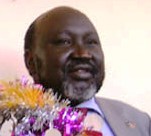
The wish list is long, but at least one thing Lakes State Governor Chol Tong Mayai hopes to see now that the Republic of South Sudan has been born is a decent life for his people. NEW TIMES’ mabior PHILIP MACH has a conversation with him:–

Q. What did people in your state, yourself inclusive, make of the Independence Day?
This is a very big day for the people of South Sudan as a whole and people of Lakes state in particular. we took it seriously as we did with the other events like the referendum. There was celebration Rumbek town, the state capital, where the celebration took. Then the other seven counties celebrated separately. The armed forces, and organized forces, like police, were trained. A team from Juba trained the people to sing the national anthem for the executive, the parliament. The police band was also trained. We worked on the Freedom Square. We did all this against financial constraints. What was agreed by GoSS to be allocated to us came very late really. What was promised to the counties did not materialize.

Q. What budget has the state allocated to the celebration?
Our budget was 1.8 million Sudanese Pounds, which we did not realize all.

Q. What was the budget constraint in the counties?
The celebration in some counties was not to the standard wished for.

Q. How did you feel about reaching the long awaited Independence Day?


Of course, it is a feeling of every southerner, wherever he is, that at last our dreams have come true. That at last what our people sacrificed for has become a reality; that at last all the people we have lost and all the contributions made are not in vain.

We now have our own identity. It is something we are proud of; it is something for which one has to thank the Almighty God, for some of us who lived to see this day. We will glorify it and we will really remember our fallen heroes and all those sacrificed to make it happen.

Q. But there have been many reports of insecurity in your state?
The security situation is now under control. There were some of these tribal fights revolving round cattle rustling in some counties; it was concentrated in Rumbek East and then parts of Rumbek North and Chueibet, and also across the border. This is now under control. The army has been brought in and also I have requested for more troops. The police and wildlife and all the security, law enforcement agencies, have been brought in jointly to keep the security in the state.

Q. There are different figures being given about the death toll. What figures do you have of those killed in recent period?
The issue is not of figures. You see, insecurity, even if one person is killed and there is feeling of fear, and then that alone disturbs. It is not the number of people killed because even one person matters. If one person is killed, then that is also human being, which we need.

So we don’t measure insecurity in terms of figures; in terms of many figures, many people killed. We measure insecurity in terms of that tranquility, that people are staying without fear.

But if people fear and even if there is no one killed, then there is insecurity. And it is what we are now trying to bring in. The figures of course vary because these are through cattle rustling. There is cattle theft, where you get two or three people killed and these are over long distances. So I cannot really tell you this is the number of people killed because this is a security report, and we have to sum them all up.

Q. As the state governor, what are your hopes now that it’s a free country?
My hopes are, of course, numerous as the hopes of any other person, including yourself, that we have to see the whole southern Sudan as a prosperous, peaceful country, joining the rest of the world in development. I want to see Lakes State prosperous and peaceful so that we can embark on development and to give the dividends of peace; the dividends of us becoming a nation to our people who have suffered for long. That a simple southern Sudanese living everywhere in southern Sudan, particularly Lakes state, should now live a decent life without fear, should now be a free man in his own country, who enjoys all the rights and now plans for his life; his children go to school, gets his own bread. These are all my hopes.

- A word from our sponsors -

sponsored: GRE. GMAT. TOEFL. IELT CLASSESspot_img

Most Popular

More from section

More Courage Than Before: Female Monitors Strengthening Early Warning Systems in South Sudan

Simona Ali, an Early Warning Monitoring Fellow from Wau, says the fellowship created a space for female journalists to share experiences and learn from each other. By passing this knowledge on to colleagues in her newsroom, she is helping strengthen awareness of journalist safety and professional rights

Speaking Up for Rights: Female Monitors Strengthening Early Warning Systems in South Sudan

Catherine Adut, an Early Warning Monitoring Fellow from Lakes State, says the fellowship helped her understand her rights and speak up against unfair treatment. Today, she encourages other female journalists to report harassment, defend their rights, and support one another in the newsroom.

Confidence to Stand Up: Female Monitors Strengthening Early Warning Systems in South Sudan

Viola Nyoka, an Early Warning Monitoring Fellow from Yei, says the fellowship helped her understand the risks female journalists face and the importance of speaking up. Through shared experiences with colleagues across South Sudan, she gained the confidence to challenge exploitation, report harassment, and stand up for her rights in the newsroom.

Knowing Where to Turn: Female Monitors Strengthening Early Warning Systems in South Sudan

Vivian Nandege, an Early Warning Monitoring Fellow from Yei, says the fellowship helped her understand where to seek support when facing challenges in journalism. Through connections with other female journalists, she has gained confidence, shared knowledge, and built a stronger professional network.

- A word from our sponsors -

spot_img

Read Now

More Courage Than Before: Female Monitors Strengthening Early Warning Systems in South Sudan

Simona Ali, an Early Warning Monitoring Fellow from Wau, says the fellowship created a space for female journalists to share experiences and learn from each other. By passing this knowledge on to colleagues in her newsroom, she is helping strengthen awareness of journalist safety and professional rights

Speaking Up for Rights: Female Monitors Strengthening Early Warning Systems in South Sudan

Catherine Adut, an Early Warning Monitoring Fellow from Lakes State, says the fellowship helped her understand her rights and speak up against unfair treatment. Today, she encourages other female journalists to report harassment, defend their rights, and support one another in the newsroom.

Confidence to Stand Up: Female Monitors Strengthening Early Warning Systems in South Sudan

Viola Nyoka, an Early Warning Monitoring Fellow from Yei, says the fellowship helped her understand the risks female journalists face and the importance of speaking up. Through shared experiences with colleagues across South Sudan, she gained the confidence to challenge exploitation, report harassment, and stand up for her rights in the newsroom.

Knowing Where to Turn: Female Monitors Strengthening Early Warning Systems in South Sudan

Vivian Nandege, an Early Warning Monitoring Fellow from Yei, says the fellowship helped her understand where to seek support when facing challenges in journalism. Through connections with other female journalists, she has gained confidence, shared knowledge, and built a stronger professional network.

Strengthening Professional Networks: Female Monitors Strengthening Early Warning Systems in South Sudan

Cecilia John Akile, an Early Warning Monitoring Fellow from Wau, says the fellowship helped her build stronger professional connections with journalists across South Sudan. Through the network, she has learned the importance of speaking openly about challenges and collaborating with colleagues to find solutions

Standing Firm Under Pressure: Female Monitors Strengthening Early Warning Systems in South Sudan

Assunta Aluel, a journalist from Twic County, says the Monitoring Fellowship helped her remain calm and professional when she faced questioning after reporting a sensitive community story. The training equipped her with the confidence and knowledge to navigate pressure while continuing her work.

Building Stronger Connections: Female Monitors Strengthening Early Warning Systems in South Sudan

Aleng Vicky, an Early Warning Monitoring Fellow from Torit, says the fellowship helped female journalists across Eastern Equatoria connect and share experiences. Through new communication platforms and peer discussions, women journalists are building stronger networks and supporting each other in the profession.

From Connection to Courage: Female Monitors Strengthen Early Warning Systems in South Sudan

"At the back of your mind, when covering news, you must remember there are things you must follow while doing this. That has instilled more confidence in us than before." - ARICH DENG

Forging a Lifeline: Female Monitors Power Early Warning Systems in South Sudan

An early warning system fellowship empowers frontline monitoring fellows to detect risks early, trigger rapid response, and strengthen protection support for those facing threats.

The Mic Was Silenced: A Young Female Journalist Struggles to Reclaim the Airwaves in South Sudan

They shut it down after a song—just a traditional tune from the wrong community—played during a flare-up in local fighting. Officials stormed in, seized the keys, and warned the staff: One more mistake, and the whole station is gone for good. For a moment, Achol was jobless...

 “If You Don’t Have the Heart for It, You Can’t Carry On”

As a child, she fled bombings by the Sudanese government and attacks by the Ugandan rebel Lord’s Resistance Army, living a refugee live in DR-Congo, CAR, and Uganda. As a woman, she faced down militias. Today, she stands at the frontline of media freedom in Western Equatoria...