

HomeNEW REPUBLIC.Disowned for studying art,...

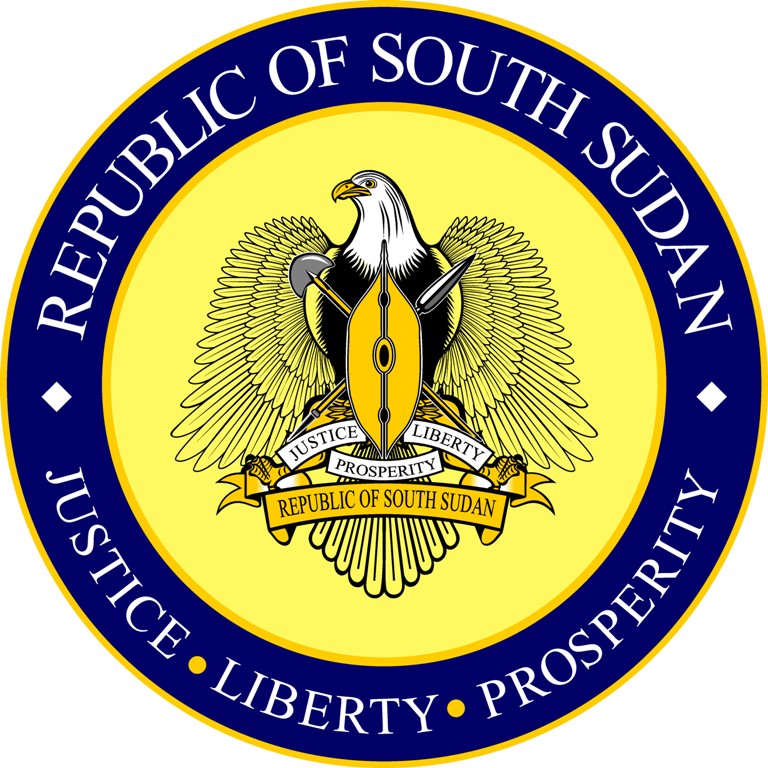
Disowned for studying art, designer of South Sudan emblem had nearly quit school

his friends and relatives discouraged him, arguing that the course was irrelevant to the developments within Sudan. No one paid his schools fees. “The one who paid [for] me to complete primary and secondary schoosl later disowned me. I had to struggle on my own to raise the fee.”


MABIOR PHILIP MACH

He has been despised for the course that he studied, but now those who were his antagonists are his cheerleaders. And, he had no one to pay his school fees, yet those who disowned him are here to congratulate him. Chol Anei Ayii was announced the best designer of the National Coat of Arms by the Ministry of Culture and Heritage, leading the top three in a hot race of 26 rivals.

He won it not by chance.
Anei told New Times that the price of $5000 he was rewarded by the government and the pride he earns all stem from sheer struggle.

“I started this thing of Coat of Arms many years ago, when I was a student,” says Chol. “Before the independence, I was always thinking that if our nation became independent, what could be the nature of our national Coat of ArmS? So I started my work on the national coat of arms – since January.”

There were thirty competitors, including four foreign nationals.
They dropped out on the way due to insufficient information on the cultural diversity of South Sudan, leaving behind 26 genuine bidders.
The versions of three designers were selected, out of which Chol’s won the approval of the Council of Ministers and the parliament, provoking his pride.
“I am, of course, very happy because I am now in the list of historic and symbolic personalities in South Sudan,” he said.
Chol Anei, a son of Tonj in Warrap state, went to Buluk Primary school in Wau in 1992, at the height of the split within the then rebel SPLA.
He later joined Rumbek Secondary School, where he completed Sudan School Certificate. He graduated with a Diploma in Graphic Design from the Sudan University of Science and Technology in 2009.


He said while pursuing the course, his friends and relatives discouraged him, arguing that the course was irrelevant to the developments within Sudan. No one paid his schools fees. “The one who paid [for] me to complete primary and secondary schoosl later disowned me. I had to struggle on my own to raise the fee,” Anei said.


He is now finding out his rejected course is needed by the nation. He is joyful.
“This tells me that the discouragement to me in the past was wrong,” he said. “This is a message to young people who like this course, which it is an important one to study.”
In all his past difficulties, Anei said he used to refer to a known Sudanese designer, Professor Mohamed Ahmed, who became a trusted mentor.
Ahmed is the designer of this Sudanese Pounds.
He designed more than 150 national items. “He was my friend and I shared with him experiences. He encouraged me until I completed.”
The two runners-up were awarded $3000 and $2000 each, but the chunk is yet to be paid by the Ministry of Culture and Heritage.


New Parliament to have 229 MPs

BY JOSEPH EDWARD

President Salva Kiir will sixty six more members of Parliament from all South Sudan political parties to add on the elected members, the of opposition in South Sudan Legislative Assembly Onyoti Adigo has said. Next Parliament will also include 93 MPs formerly representing the South in the Northern Parliament, and 170 current MPs to make Parliament at least 229. MPs are on leave until August 29.

Caretakers can’t take major decisions

BY JOSEPH EDWARD


President Salva Kiir has said caretaker ministers are not supposed to take major policy decision. This was in the decree the President passed recently naming a caretaker government, and reconfirming Presidential Advisors pending final reorganization of the government.

The Advisors are Lual Diing Wuol Advisor for Political Affairs, John Koung Nyoun Advisor for Security Affairs, Madam Rebekah Nyandeng De Mabior Advisor on Gender and Human Rights, Telar Riing Deng Advisor on Legal Affairs, Alfred Lodu Gore Advisor on Diplomatic Affairs, Tor Deng Mawein Advisor on Decentralization and Intergovernmental Linkages, Salva Mathok Gengdit Advisor on Military Affairs, Cornelius Befo Advisor on Monitoring and Integrity in Governance, Col. Sidig El Manas Basil on Southern Blue Nile, Chief Kong Kong Bol Advisor on Inter Communal Peace, Joseph Lagu Yanga Special Advisor, Dr.Martin Elia Lomuro Advisor on Public Affairs, General Kennedy Gen. Ngery Inter communal Peace and Traditional Leadership Affairs, Chief Tem Kok Ngor Advisor on Inter border conflict and Traditional Leadership Affairs, Dr. Joseph Montueyl Wejang Advisor on Social Services, Rev. Tijowk Hadher Agwet Advisor on Religious Affairs, Isaiah Kulang Mabor Special Advisor for Wild Life and Tourism and Gissmallah Abdallah Rasas Special Advisor to The President.

- A word from our sponsors -

sponsored: GRE. GMAT. TOEFL. IELT CLASSESspot_img

Most Popular

More from section

More Courage Than Before: Female Monitors Strengthening Early Warning Systems in South Sudan

Simona Ali, an Early Warning Monitoring Fellow from Wau, says the fellowship created a space for female journalists to share experiences and learn from each other. By passing this knowledge on to colleagues in her newsroom, she is helping strengthen awareness of journalist safety and professional rights

Speaking Up for Rights: Female Monitors Strengthening Early Warning Systems in South Sudan

Catherine Adut, an Early Warning Monitoring Fellow from Lakes State, says the fellowship helped her understand her rights and speak up against unfair treatment. Today, she encourages other female journalists to report harassment, defend their rights, and support one another in the newsroom.

Confidence to Stand Up: Female Monitors Strengthening Early Warning Systems in South Sudan

Viola Nyoka, an Early Warning Monitoring Fellow from Yei, says the fellowship helped her understand the risks female journalists face and the importance of speaking up. Through shared experiences with colleagues across South Sudan, she gained the confidence to challenge exploitation, report harassment, and stand up for her rights in the newsroom.

Knowing Where to Turn: Female Monitors Strengthening Early Warning Systems in South Sudan

Vivian Nandege, an Early Warning Monitoring Fellow from Yei, says the fellowship helped her understand where to seek support when facing challenges in journalism. Through connections with other female journalists, she has gained confidence, shared knowledge, and built a stronger professional network.

- A word from our sponsors -

spot_img

Read Now

More Courage Than Before: Female Monitors Strengthening Early Warning Systems in South Sudan

Simona Ali, an Early Warning Monitoring Fellow from Wau, says the fellowship created a space for female journalists to share experiences and learn from each other. By passing this knowledge on to colleagues in her newsroom, she is helping strengthen awareness of journalist safety and professional rights

Speaking Up for Rights: Female Monitors Strengthening Early Warning Systems in South Sudan

Catherine Adut, an Early Warning Monitoring Fellow from Lakes State, says the fellowship helped her understand her rights and speak up against unfair treatment. Today, she encourages other female journalists to report harassment, defend their rights, and support one another in the newsroom.

Confidence to Stand Up: Female Monitors Strengthening Early Warning Systems in South Sudan

Viola Nyoka, an Early Warning Monitoring Fellow from Yei, says the fellowship helped her understand the risks female journalists face and the importance of speaking up. Through shared experiences with colleagues across South Sudan, she gained the confidence to challenge exploitation, report harassment, and stand up for her rights in the newsroom.

Knowing Where to Turn: Female Monitors Strengthening Early Warning Systems in South Sudan

Vivian Nandege, an Early Warning Monitoring Fellow from Yei, says the fellowship helped her understand where to seek support when facing challenges in journalism. Through connections with other female journalists, she has gained confidence, shared knowledge, and built a stronger professional network.

Strengthening Professional Networks: Female Monitors Strengthening Early Warning Systems in South Sudan

Cecilia John Akile, an Early Warning Monitoring Fellow from Wau, says the fellowship helped her build stronger professional connections with journalists across South Sudan. Through the network, she has learned the importance of speaking openly about challenges and collaborating with colleagues to find solutions

Standing Firm Under Pressure: Female Monitors Strengthening Early Warning Systems in South Sudan

Assunta Aluel, a journalist from Twic County, says the Monitoring Fellowship helped her remain calm and professional when she faced questioning after reporting a sensitive community story. The training equipped her with the confidence and knowledge to navigate pressure while continuing her work.

Building Stronger Connections: Female Monitors Strengthening Early Warning Systems in South Sudan

Aleng Vicky, an Early Warning Monitoring Fellow from Torit, says the fellowship helped female journalists across Eastern Equatoria connect and share experiences. Through new communication platforms and peer discussions, women journalists are building stronger networks and supporting each other in the profession.

From Connection to Courage: Female Monitors Strengthen Early Warning Systems in South Sudan

"At the back of your mind, when covering news, you must remember there are things you must follow while doing this. That has instilled more confidence in us than before." - ARICH DENG

Forging a Lifeline: Female Monitors Power Early Warning Systems in South Sudan

An early warning system fellowship empowers frontline monitoring fellows to detect risks early, trigger rapid response, and strengthen protection support for those facing threats.

The Mic Was Silenced: A Young Female Journalist Struggles to Reclaim the Airwaves in South Sudan

They shut it down after a song—just a traditional tune from the wrong community—played during a flare-up in local fighting. Officials stormed in, seized the keys, and warned the staff: One more mistake, and the whole station is gone for good. For a moment, Achol was jobless...

 “If You Don’t Have the Heart for It, You Can’t Carry On”

As a child, she fled bombings by the Sudanese government and attacks by the Ugandan rebel Lord’s Resistance Army, living a refugee live in DR-Congo, CAR, and Uganda. As a woman, she faced down militias. Today, she stands at the frontline of media freedom in Western Equatoria...