

Juba Car Bond Launch Caps a Week of Laughter. But First, Families Displaced

As the city’s first car bond opens, comedian Wokil looks at the crowd, smiles, grabs the mic, and sends the crowd into a frenzy. “A friend of mine – a lieutenant – married the only female major General in the army, but they never had a child for four years. When asked what the matter was up his trousers, he rudely replied, ‘How can I perform, if the Major General has not given me orders to perform. I’m just a lieutenant.”.

Not to be outdone in sending the crowd roaring, Nejuwa Juma, Central Equatoria’ state minister for Health, representing the governor, remarks that she thought she had been given car keys only to discover that it is a placard .”I was confident of going home with a car when you people announced that it is time for gifts, for (car gifts) is the only thing associated with car dealers.”

They are not the only ones keeping it light. Juba City Mayor His Worship Michael Allah Jabu takes on deputy Hon Thiik Thiik Mayardit, showcasing their respective traditional-dances to renowned singer Emmanuel Kembe’s pop music, before complaining about how old his car looks compared to the vehicles in the bond. “A friend just whispered to me that this is called intelligent begging. Look at my siren car, it’s not worth being parked next to your new cars. It’s been in use for nearly a decade”

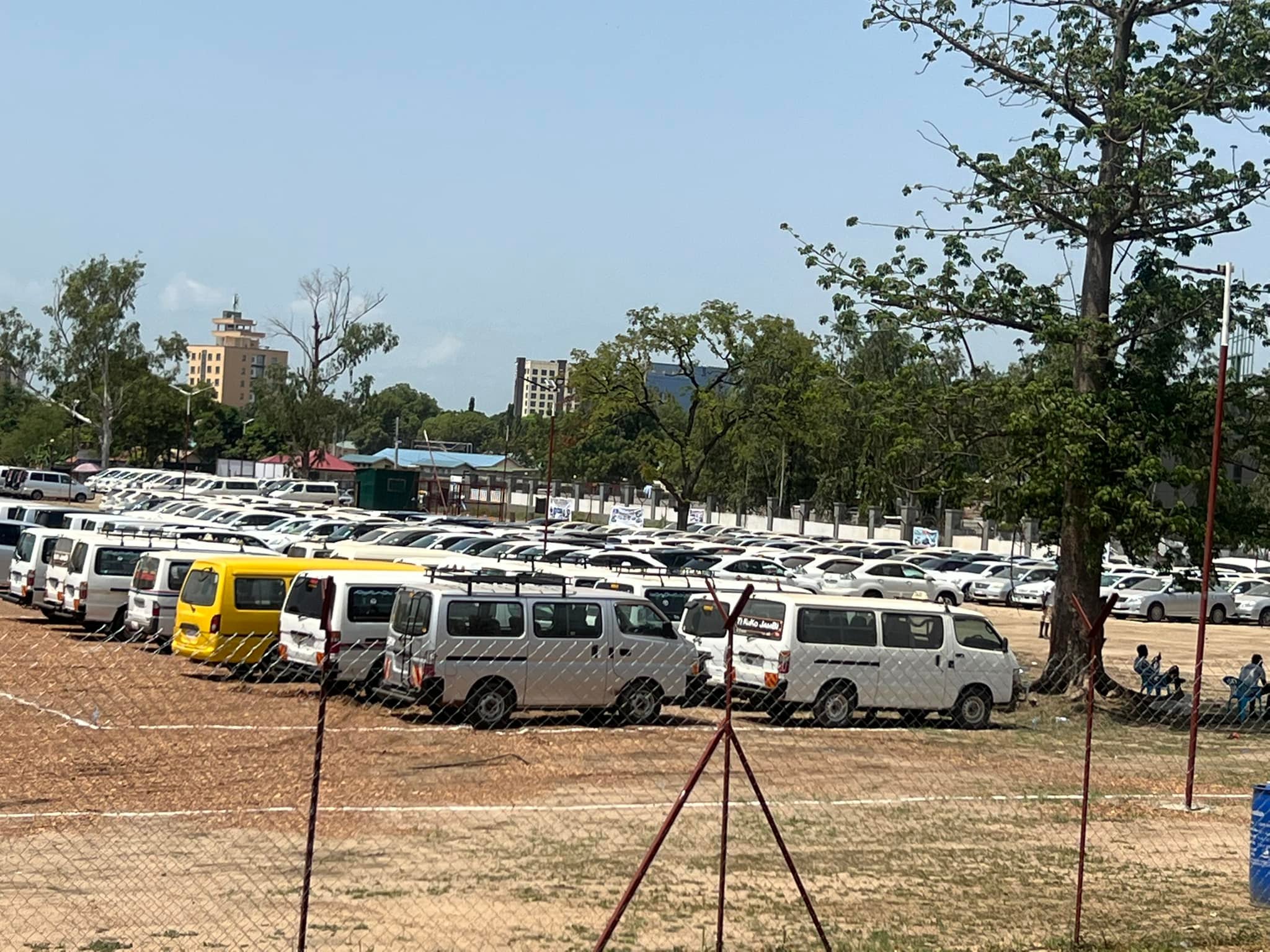
As if on cue from a World Bank panel discussion two days prior, the June 17 opening ceremony for Juba’s first car bond – a full feast at which a big bull was slaughtered in front of the gathered guests – took comedy and laughter to a whole new level. A brain child of Al-Mangalawi company, in partnership with the city council, the bond is aimed at decongesting the streets of the city, especially Malakia and Hai Malakal neighborhoods, where cars are lined up on streets for sale. Located adjacent to Juba Teaching Hospital, the bond can accommodate up to 2000 cars and has tens of offices for auto dealers. “Currently, we are receiving an average of 15-20 cars every day with plans to expand it to a place with a bigger capacity in the future”, says Al-Mangalawi CEO Emmanuel Sebit.
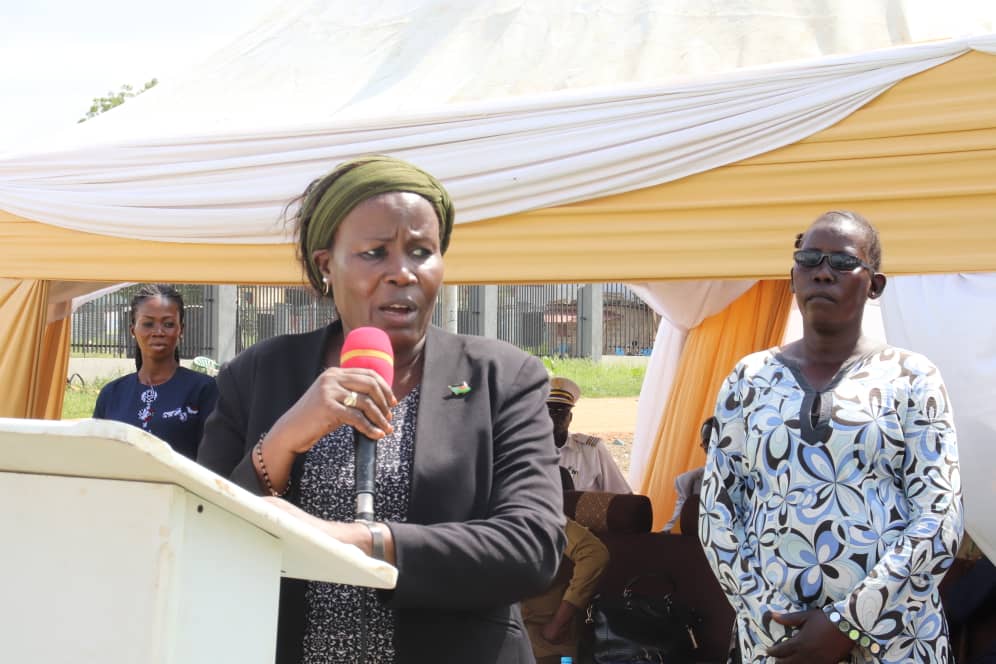
Hon Juma Nejuwa giving her speech as her bodyguard rudely looks on (Photo: Jenifer Jok)

To construct the bond, the city evicted families of squatters. The squatters had resisted displacement, urging that some of their loved ones are buried in the area.

“This place has been used as a safe haven by criminals, but with this bond, it will become a thing of the past. I urge all of you to support the Authority of Juba City Council to deliver the services to the people since our motto is to keep Juba Clean, Green, Save and Beautiful”, the Mayor says. “If your home is noisy, disorganized and inconveniencing the residents of the city, we will storm it because we will consider you an enemy to the city.”

Suzan Taban is the deputy head of Juba Block Council. “We will make sure no vehicles are sold or parked for sale on the roads of the city. We are coming for those who will not abide by this,” she says.
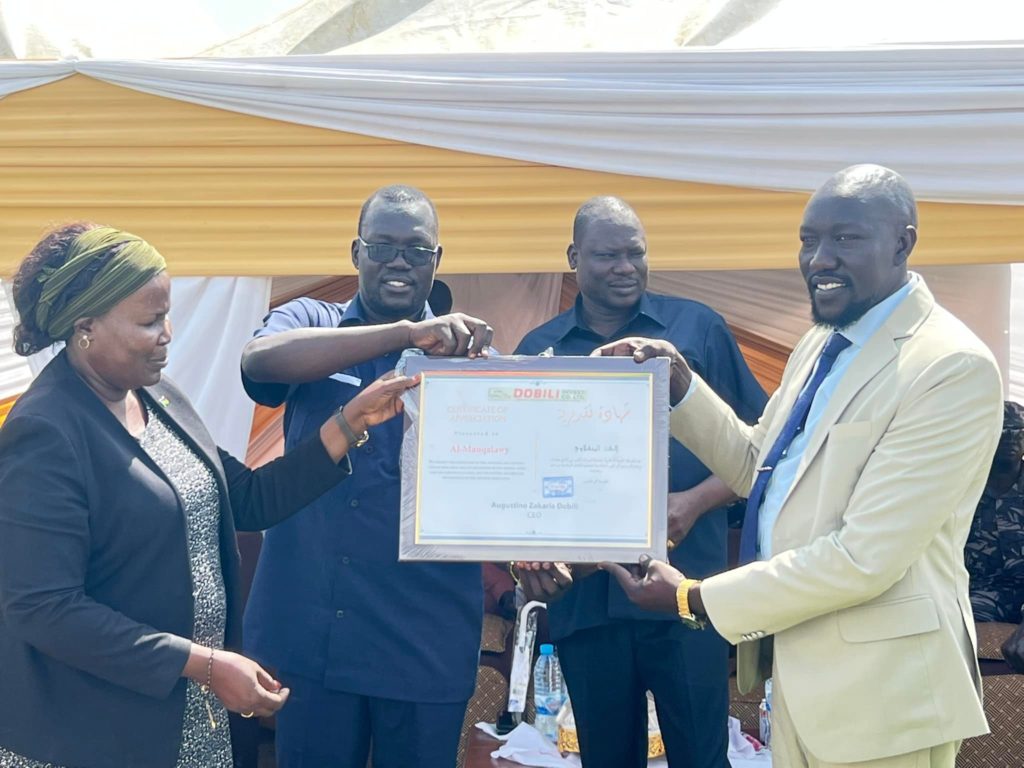
Hon Nejuwa, His Worship Alli-Jabu & his deputy and Emmanuel Sebit of El Mangalawi displaying one of the gifts

SAFE, BUT NO SALES

The bond is open to every salesperson. Registration fee per car is only $0.8USD. But will car prices fall? No, says one salesman, prices will instead increase given an increase in tax rate to 100% the value of the car.

In the context of the current economic downturn, dealers are discovering that it is one thing to have a bond, another to have buyers. The following day, Muzofuli Patrick, 26, is here to sell a car sent to him by his Ugandan friend. A tap on the window of the grey Toyota Premio startles him from his nap. “Sorry boss,” he swings into action, salesman style, showing off the car’s interior. “Welcome, sir. You can have a look,” he adds, opening the door, stepping out of the car, and dusting the rear window. “If business picks up in this place, I will soon start importing my own because there is a safety guarantee here,” he adds. “As things stand, it’s boring.”

The bond comes with constraints. Before, Muzofuli could drive home for lunch, visit a girlfriend, and go partying all while selling the car; at the bond, once one registers the car, one parks it there, until a sale is actualized.

Juma Wuor Deng of M-T Auto Company is among the beneficiaries of the bond. “Once a car is in the bond, it never gets out of the bond, unless it is going for service, with permission in case of a technical repair. After selling a car, the owner pays an average of $50-$100USD, depending on the model of the car,” says Deng.

“We are proud to be among the founding members of this bond. Now we can sleep in peace knowing that our cars are in a safe place, unlike in the past when we would sleep with a lot of anxiety over the safety of our investments being parked on the road sides.”

- A word from our sponsors -

sponsored: GRE. GMAT. TOEFL. IELT CLASSESspot_img

Most Popular

More from section

More Courage Than Before: Female Monitors Strengthening Early Warning Systems in South Sudan

Simona Ali, an Early Warning Monitoring Fellow from Wau, says the fellowship created a space for female journalists to share experiences and learn from each other. By passing this knowledge on to colleagues in her newsroom, she is helping strengthen awareness of journalist safety and professional rights

Speaking Up for Rights: Female Monitors Strengthening Early Warning Systems in South Sudan

Catherine Adut, an Early Warning Monitoring Fellow from Lakes State, says the fellowship helped her understand her rights and speak up against unfair treatment. Today, she encourages other female journalists to report harassment, defend their rights, and support one another in the newsroom.

Confidence to Stand Up: Female Monitors Strengthening Early Warning Systems in South Sudan

Viola Nyoka, an Early Warning Monitoring Fellow from Yei, says the fellowship helped her understand the risks female journalists face and the importance of speaking up. Through shared experiences with colleagues across South Sudan, she gained the confidence to challenge exploitation, report harassment, and stand up for her rights in the newsroom.

Knowing Where to Turn: Female Monitors Strengthening Early Warning Systems in South Sudan

Vivian Nandege, an Early Warning Monitoring Fellow from Yei, says the fellowship helped her understand where to seek support when facing challenges in journalism. Through connections with other female journalists, she has gained confidence, shared knowledge, and built a stronger professional network.

- A word from our sponsors -

spot_img

Read Now

More Courage Than Before: Female Monitors Strengthening Early Warning Systems in South Sudan

Simona Ali, an Early Warning Monitoring Fellow from Wau, says the fellowship created a space for female journalists to share experiences and learn from each other. By passing this knowledge on to colleagues in her newsroom, she is helping strengthen awareness of journalist safety and professional rights

Speaking Up for Rights: Female Monitors Strengthening Early Warning Systems in South Sudan

Catherine Adut, an Early Warning Monitoring Fellow from Lakes State, says the fellowship helped her understand her rights and speak up against unfair treatment. Today, she encourages other female journalists to report harassment, defend their rights, and support one another in the newsroom.

Confidence to Stand Up: Female Monitors Strengthening Early Warning Systems in South Sudan

Viola Nyoka, an Early Warning Monitoring Fellow from Yei, says the fellowship helped her understand the risks female journalists face and the importance of speaking up. Through shared experiences with colleagues across South Sudan, she gained the confidence to challenge exploitation, report harassment, and stand up for her rights in the newsroom.

Knowing Where to Turn: Female Monitors Strengthening Early Warning Systems in South Sudan

Vivian Nandege, an Early Warning Monitoring Fellow from Yei, says the fellowship helped her understand where to seek support when facing challenges in journalism. Through connections with other female journalists, she has gained confidence, shared knowledge, and built a stronger professional network.

Strengthening Professional Networks: Female Monitors Strengthening Early Warning Systems in South Sudan

Cecilia John Akile, an Early Warning Monitoring Fellow from Wau, says the fellowship helped her build stronger professional connections with journalists across South Sudan. Through the network, she has learned the importance of speaking openly about challenges and collaborating with colleagues to find solutions

Standing Firm Under Pressure: Female Monitors Strengthening Early Warning Systems in South Sudan

Assunta Aluel, a journalist from Twic County, says the Monitoring Fellowship helped her remain calm and professional when she faced questioning after reporting a sensitive community story. The training equipped her with the confidence and knowledge to navigate pressure while continuing her work.

Building Stronger Connections: Female Monitors Strengthening Early Warning Systems in South Sudan

Aleng Vicky, an Early Warning Monitoring Fellow from Torit, says the fellowship helped female journalists across Eastern Equatoria connect and share experiences. Through new communication platforms and peer discussions, women journalists are building stronger networks and supporting each other in the profession.

From Connection to Courage: Female Monitors Strengthen Early Warning Systems in South Sudan

"At the back of your mind, when covering news, you must remember there are things you must follow while doing this. That has instilled more confidence in us than before." - ARICH DENG

Forging a Lifeline: Female Monitors Power Early Warning Systems in South Sudan

An early warning system fellowship empowers frontline monitoring fellows to detect risks early, trigger rapid response, and strengthen protection support for those facing threats.

The Mic Was Silenced: A Young Female Journalist Struggles to Reclaim the Airwaves in South Sudan

They shut it down after a song—just a traditional tune from the wrong community—played during a flare-up in local fighting. Officials stormed in, seized the keys, and warned the staff: One more mistake, and the whole station is gone for good. For a moment, Achol was jobless...

 “If You Don’t Have the Heart for It, You Can’t Carry On”

As a child, she fled bombings by the Sudanese government and attacks by the Ugandan rebel Lord’s Resistance Army, living a refugee live in DR-Congo, CAR, and Uganda. As a woman, she faced down militias. Today, she stands at the frontline of media freedom in Western Equatoria...