

You’re Not Poor, Your Tech is Poor: South Sudan’s $4.5bn Hides in Plain Sight

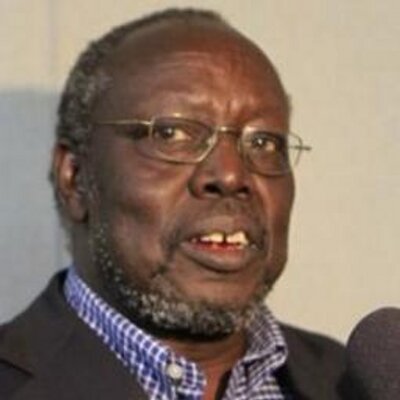
How does South Sudan claim its EXTRA $4.5 billion annually? The answer: Go for superior drilling technology, replacing the current technology, says Dr. Lual Deng.

By the estimates of the former Petroleum Minister and World Bank Economist, superior technology from the United States could increase oil production income by $12.5m a day, he has told the Revised National Development Strategy conference at Freedom Hall June 22.
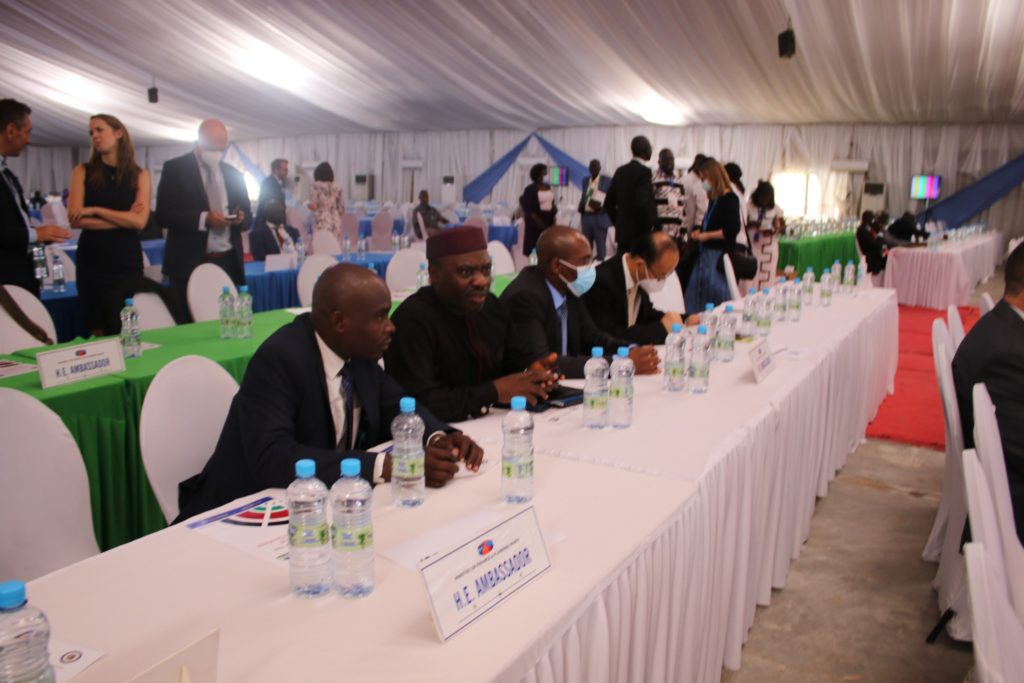
Diplomats at the event

SUPERIOR U.S. TECH

“With American technology, we can hit a production capacity of 500000 barrels a day by the year 2030. That, at an estimate of $50USD per barrel, will translate into $12.5 million dollars a day and $4.5 billion dollars annually, which is enough to fund the RNDS,” while responding to a question on how to finance South Sudan’s Revised National Development Strategy (RNDS) 2024 this morning at Freedom Hall in Juba.

“Get rid of the inferior Chinese Technologies and acquire American Technology, then you will see the difference. Don’t ask me how because I have been there (petroleum ministry) and I know the difference”, he said, adding that the country has not used up even 10 percent of its reserves.

The RNDS, the country’s third development blue print seeks to put the country on a sustainable path and promises a robust re-engagement with the country’s development partners.

South Sudan produces roughly 150,000 to 170,000 barrels a day, but its profit stands at between fifth to a quarter of the value of the oil (roughly 45,000 barrels) after removing production costs owed to oil companies and transit fees paid to Sudan.

By this estimate, increasing production by half a million barrels would not earn government an extra $4.5 billion, as per Dr. Lual’s estimates, but would bring in $1 billion profit at most.

The use of Chinese technology in South Sudan’s oil sector is mainly associated with the China National Petroleum Corporation that first joined the petroleum industry in Sudan in 1995. CNPC established its South Sudan office after independence to handle operations in the south, closing office for a year after war broke out in 2013.
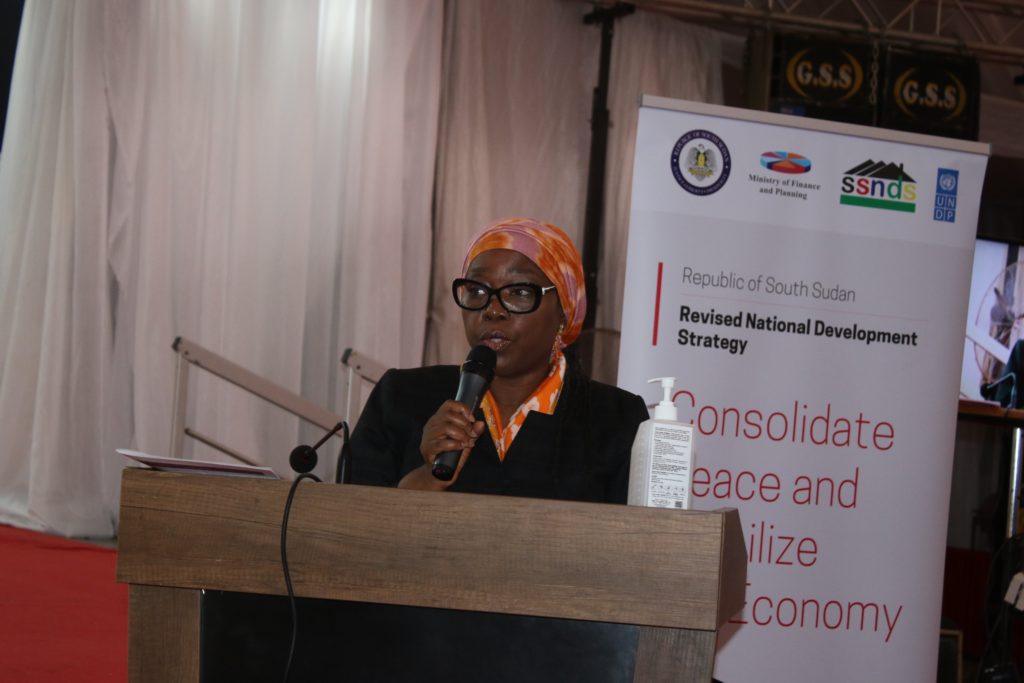
Sara Beysolow Nyanti
United Nations DSRSG/RC/HC in South Sudan

THEN, ROADS AND PIPELINES

First Vice President Dr. Riek Machar attended the launch of the RNDS, facilitated by UNDP. The petroleum docket falls under the SPLM in Opposition.

“When you increase investment in oil pipelines and roads infrastructure, you will spark up growth in the non-oil sectors which will translate into a lot of money,” said Lual, adding that for all this to work, there had to be what he referred to as the three Ps. “There has to be Political will to get Peace and then you can have institutions to manage Public Finance.”

- A word from our sponsors -

sponsored: GRE. GMAT. TOEFL. IELT CLASSESspot_img

Most Popular

1 COMMENT

  1. Dear Sir/Madam,
    i works with Community Aid for Humanitarian Organization (CAHO) is an community local organization operating in South Sudan for last 6 years, therefore we are looking forward for any new opportunities funding through your office, your support is highly appreciated.
    Best Regards
    John Lasu Noah
    Executive Director
    Community Aid for Humanitarian Organization (CAHO)
    Email:johnlasu.caho.2017@gmail.com
    Tel:+211922500003

More from section

More Courage Than Before: Female Monitors Strengthening Early Warning Systems in South Sudan

Simona Ali, an Early Warning Monitoring Fellow from Wau, says the fellowship created a space for female journalists to share experiences and learn from each other. By passing this knowledge on to colleagues in her newsroom, she is helping strengthen awareness of journalist safety and professional rights

Speaking Up for Rights: Female Monitors Strengthening Early Warning Systems in South Sudan

Catherine Adut, an Early Warning Monitoring Fellow from Lakes State, says the fellowship helped her understand her rights and speak up against unfair treatment. Today, she encourages other female journalists to report harassment, defend their rights, and support one another in the newsroom.

Confidence to Stand Up: Female Monitors Strengthening Early Warning Systems in South Sudan

Viola Nyoka, an Early Warning Monitoring Fellow from Yei, says the fellowship helped her understand the risks female journalists face and the importance of speaking up. Through shared experiences with colleagues across South Sudan, she gained the confidence to challenge exploitation, report harassment, and stand up for her rights in the newsroom.

Knowing Where to Turn: Female Monitors Strengthening Early Warning Systems in South Sudan

Vivian Nandege, an Early Warning Monitoring Fellow from Yei, says the fellowship helped her understand where to seek support when facing challenges in journalism. Through connections with other female journalists, she has gained confidence, shared knowledge, and built a stronger professional network.

- A word from our sponsors -

spot_img

Read Now

More Courage Than Before: Female Monitors Strengthening Early Warning Systems in South Sudan

Simona Ali, an Early Warning Monitoring Fellow from Wau, says the fellowship created a space for female journalists to share experiences and learn from each other. By passing this knowledge on to colleagues in her newsroom, she is helping strengthen awareness of journalist safety and professional rights

Speaking Up for Rights: Female Monitors Strengthening Early Warning Systems in South Sudan

Catherine Adut, an Early Warning Monitoring Fellow from Lakes State, says the fellowship helped her understand her rights and speak up against unfair treatment. Today, she encourages other female journalists to report harassment, defend their rights, and support one another in the newsroom.

Confidence to Stand Up: Female Monitors Strengthening Early Warning Systems in South Sudan

Viola Nyoka, an Early Warning Monitoring Fellow from Yei, says the fellowship helped her understand the risks female journalists face and the importance of speaking up. Through shared experiences with colleagues across South Sudan, she gained the confidence to challenge exploitation, report harassment, and stand up for her rights in the newsroom.

Knowing Where to Turn: Female Monitors Strengthening Early Warning Systems in South Sudan

Vivian Nandege, an Early Warning Monitoring Fellow from Yei, says the fellowship helped her understand where to seek support when facing challenges in journalism. Through connections with other female journalists, she has gained confidence, shared knowledge, and built a stronger professional network.

Strengthening Professional Networks: Female Monitors Strengthening Early Warning Systems in South Sudan

Cecilia John Akile, an Early Warning Monitoring Fellow from Wau, says the fellowship helped her build stronger professional connections with journalists across South Sudan. Through the network, she has learned the importance of speaking openly about challenges and collaborating with colleagues to find solutions

Standing Firm Under Pressure: Female Monitors Strengthening Early Warning Systems in South Sudan

Assunta Aluel, a journalist from Twic County, says the Monitoring Fellowship helped her remain calm and professional when she faced questioning after reporting a sensitive community story. The training equipped her with the confidence and knowledge to navigate pressure while continuing her work.

Building Stronger Connections: Female Monitors Strengthening Early Warning Systems in South Sudan

Aleng Vicky, an Early Warning Monitoring Fellow from Torit, says the fellowship helped female journalists across Eastern Equatoria connect and share experiences. Through new communication platforms and peer discussions, women journalists are building stronger networks and supporting each other in the profession.

From Connection to Courage: Female Monitors Strengthen Early Warning Systems in South Sudan

"At the back of your mind, when covering news, you must remember there are things you must follow while doing this. That has instilled more confidence in us than before." - ARICH DENG

Forging a Lifeline: Female Monitors Power Early Warning Systems in South Sudan

An early warning system fellowship empowers frontline monitoring fellows to detect risks early, trigger rapid response, and strengthen protection support for those facing threats.

The Mic Was Silenced: A Young Female Journalist Struggles to Reclaim the Airwaves in South Sudan

They shut it down after a song—just a traditional tune from the wrong community—played during a flare-up in local fighting. Officials stormed in, seized the keys, and warned the staff: One more mistake, and the whole station is gone for good. For a moment, Achol was jobless...

 “If You Don’t Have the Heart for It, You Can’t Carry On”

As a child, she fled bombings by the Sudanese government and attacks by the Ugandan rebel Lord’s Resistance Army, living a refugee live in DR-Congo, CAR, and Uganda. As a woman, she faced down militias. Today, she stands at the frontline of media freedom in Western Equatoria...