

HomeNEW REPUBLIC.How contractors' Delays Nearly...

How contractors’ Delays Nearly Messed Up Independence Plans

When people do anything for the first time, you have no experience to fall back on, and so as things happen you discover that some of your plans were not exactly as you had foreseen them. And so, from time to time, we stumbled on something that we should have done, but we did not do and we hurriedly tried to address them.

MABIOR PHILIP MACH

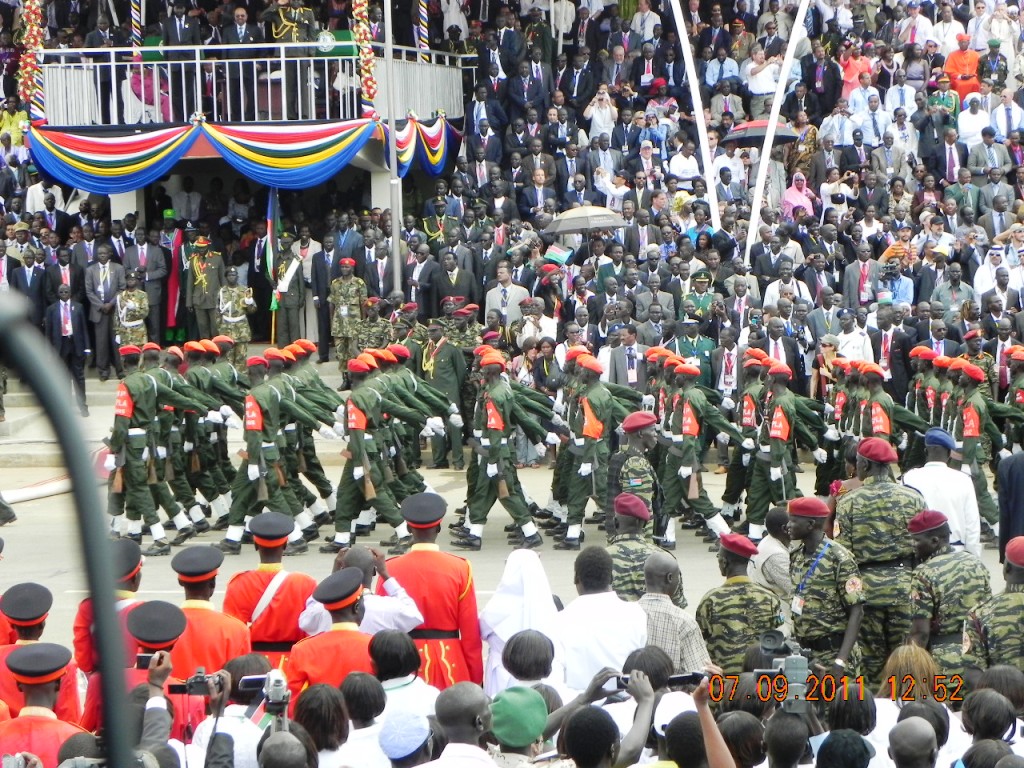
The top Independence Day organizer has told of how officials worked day and night to pull off the feat only to be nearly torpedoed by delayed contractors.
The Chairman of the Technical Committee for the Preparations for the Independence of South Sudan, Abdon Agau, however, said that things they did not anticipate were just a few, which they missed out due to inexperience.
“When people do anything for the first time, you have no experience to fall back on, and so as things happen you discover that some of your plans were not exactly as you had foreseen them,” Abdon, also the Secretary-General of Government, said. “And so, from time to time, we stumbled on something that we should have done but we did not do and we hurriedly tried to address them.”
“For most of the programs, the only challenge was that the contracts were given late and when some of the contractors started assembling their resources to start the contracts they were not very successful in doing it in time,” said Abdon.
He said, “the spirit with which people have been doing things, whether in the various committees or among the workers who have been employed by the various contractors has been great’.
“Otherwise, most of the work could not have been achieved this time,” he said.
Independence was badly sought after.
But the most enduring agony in the long quest for freedom, according to Abdon, was the sight of seeing dead colleagues.
Of course, Abdon himself did not fight physically, given the fact that he was in the southern opposition to the rebel administration during the war. He made his political struggles abroad. But his frequent movements to liberated areas as part of his political work exposed him to the horrible undertakings situations.
“For those who fought, it is amazing to look back now to even imagine how the war itself could have been executed under those very rudimentary conditions without real roads, without garages for maintaining cars, without power, sometimes without water in many of the places where people had to fight,” Abdon said, his voice trembling.


“They are now, in some cases, memories at which people laugh. The experiences of fighters during that time were bitter. But for most of the former fighters, when they sit together and look back to those times, they sometimes cannot help but laugh at those difficult situations they had to go through,” he said.


Added Abdon: “There are those bad moments when you remember a comrade in arms being shot and dying in action next to you. These are things that make people shed tears in memory.”
The interim period is officially over, and so is the ceasefire. The new country has begun in joy and excitement. days are apparently over.  It is a period of joy now. Yet more is expected in terms of services and good governance from the sacrifices made.
 

- A word from our sponsors -

sponsored: GRE. GMAT. TOEFL. IELT CLASSESspot_img

Most Popular

More from section

More Courage Than Before: Female Monitors Strengthening Early Warning Systems in South Sudan

Simona Ali, an Early Warning Monitoring Fellow from Wau, says the fellowship created a space for female journalists to share experiences and learn from each other. By passing this knowledge on to colleagues in her newsroom, she is helping strengthen awareness of journalist safety and professional rights

Speaking Up for Rights: Female Monitors Strengthening Early Warning Systems in South Sudan

Catherine Adut, an Early Warning Monitoring Fellow from Lakes State, says the fellowship helped her understand her rights and speak up against unfair treatment. Today, she encourages other female journalists to report harassment, defend their rights, and support one another in the newsroom.

Confidence to Stand Up: Female Monitors Strengthening Early Warning Systems in South Sudan

Viola Nyoka, an Early Warning Monitoring Fellow from Yei, says the fellowship helped her understand the risks female journalists face and the importance of speaking up. Through shared experiences with colleagues across South Sudan, she gained the confidence to challenge exploitation, report harassment, and stand up for her rights in the newsroom.

Knowing Where to Turn: Female Monitors Strengthening Early Warning Systems in South Sudan

Vivian Nandege, an Early Warning Monitoring Fellow from Yei, says the fellowship helped her understand where to seek support when facing challenges in journalism. Through connections with other female journalists, she has gained confidence, shared knowledge, and built a stronger professional network.

- A word from our sponsors -

spot_img

Read Now

More Courage Than Before: Female Monitors Strengthening Early Warning Systems in South Sudan

Simona Ali, an Early Warning Monitoring Fellow from Wau, says the fellowship created a space for female journalists to share experiences and learn from each other. By passing this knowledge on to colleagues in her newsroom, she is helping strengthen awareness of journalist safety and professional rights

Speaking Up for Rights: Female Monitors Strengthening Early Warning Systems in South Sudan

Catherine Adut, an Early Warning Monitoring Fellow from Lakes State, says the fellowship helped her understand her rights and speak up against unfair treatment. Today, she encourages other female journalists to report harassment, defend their rights, and support one another in the newsroom.

Confidence to Stand Up: Female Monitors Strengthening Early Warning Systems in South Sudan

Viola Nyoka, an Early Warning Monitoring Fellow from Yei, says the fellowship helped her understand the risks female journalists face and the importance of speaking up. Through shared experiences with colleagues across South Sudan, she gained the confidence to challenge exploitation, report harassment, and stand up for her rights in the newsroom.

Knowing Where to Turn: Female Monitors Strengthening Early Warning Systems in South Sudan

Vivian Nandege, an Early Warning Monitoring Fellow from Yei, says the fellowship helped her understand where to seek support when facing challenges in journalism. Through connections with other female journalists, she has gained confidence, shared knowledge, and built a stronger professional network.

Strengthening Professional Networks: Female Monitors Strengthening Early Warning Systems in South Sudan

Cecilia John Akile, an Early Warning Monitoring Fellow from Wau, says the fellowship helped her build stronger professional connections with journalists across South Sudan. Through the network, she has learned the importance of speaking openly about challenges and collaborating with colleagues to find solutions

Standing Firm Under Pressure: Female Monitors Strengthening Early Warning Systems in South Sudan

Assunta Aluel, a journalist from Twic County, says the Monitoring Fellowship helped her remain calm and professional when she faced questioning after reporting a sensitive community story. The training equipped her with the confidence and knowledge to navigate pressure while continuing her work.

Building Stronger Connections: Female Monitors Strengthening Early Warning Systems in South Sudan

Aleng Vicky, an Early Warning Monitoring Fellow from Torit, says the fellowship helped female journalists across Eastern Equatoria connect and share experiences. Through new communication platforms and peer discussions, women journalists are building stronger networks and supporting each other in the profession.

From Connection to Courage: Female Monitors Strengthen Early Warning Systems in South Sudan

"At the back of your mind, when covering news, you must remember there are things you must follow while doing this. That has instilled more confidence in us than before." - ARICH DENG

Forging a Lifeline: Female Monitors Power Early Warning Systems in South Sudan

An early warning system fellowship empowers frontline monitoring fellows to detect risks early, trigger rapid response, and strengthen protection support for those facing threats.

The Mic Was Silenced: A Young Female Journalist Struggles to Reclaim the Airwaves in South Sudan

They shut it down after a song—just a traditional tune from the wrong community—played during a flare-up in local fighting. Officials stormed in, seized the keys, and warned the staff: One more mistake, and the whole station is gone for good. For a moment, Achol was jobless...

 “If You Don’t Have the Heart for It, You Can’t Carry On”

As a child, she fled bombings by the Sudanese government and attacks by the Ugandan rebel Lord’s Resistance Army, living a refugee live in DR-Congo, CAR, and Uganda. As a woman, she faced down militias. Today, she stands at the frontline of media freedom in Western Equatoria...
