
BY ELIJAH ALIER AYOM –
Days before independence, some wrote asking that Joseph Lagu, not President Kiir, raise the flag for the new nation and that prisons be emptied for this day. The final achievement was a result of the collective effort of different individuals and groups to varying degrees of success. Nobody should usurp its ownership. Allowing General (Rtd) Joseph Lagu Yanga to raise the Flag would have been an attempt to derail history of South Sudan
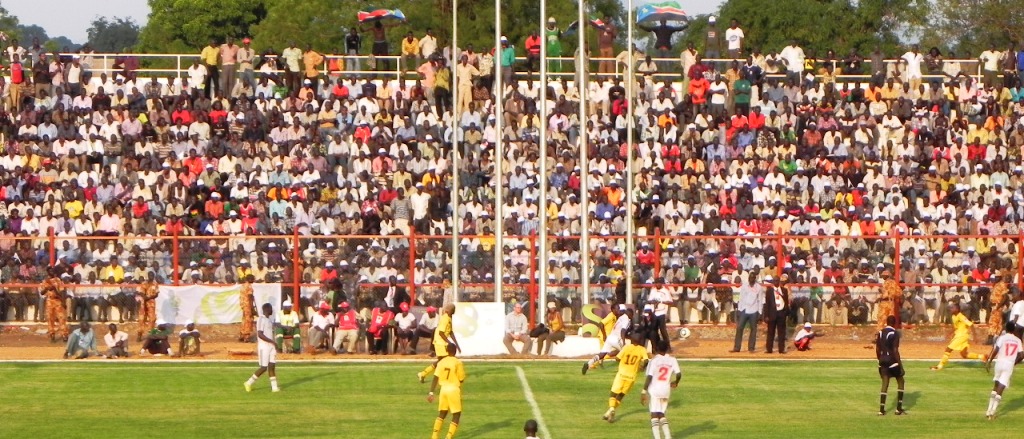
Kenya’s Tusker FC plays an independence celebratory match against south Sudan. You can’t asked a former captain to pick the trophy when the current team wins
ELIJAH ALIER AYOM
DesignationOpinion Contributor
Let’s refresh our minds. Staging National Independence Day celebrations in Juba did not mean that Juba deserved more than Torit, Rumbek, Bor, etc, which played significant and salient roles, especially during the last part of liberation struggle.
It simply meant that South Sudanese wanted to strengthen their resolve to foster long-term solidarity and unity of purpose. Juba stole the limelight of this unforgettable milestone, although we know that it was Juba that did not do its homework properly in the 1947 conference; it was Juba that did not fight well in 1955; it was in Juba that in 1983 General (Rtd) Joseph Lagu Yanga wrote disintegration of the South Sudan on the monumental wall of divide and rule; and it was Juba that delayed availability of land for United Nations, non-governmental organizations (NGOs) and multi-national companies to invest. Yet we accepted to celebrate in Juba even though it lacked socio-cultural environment and compass to demonstrate the spirit of being together.
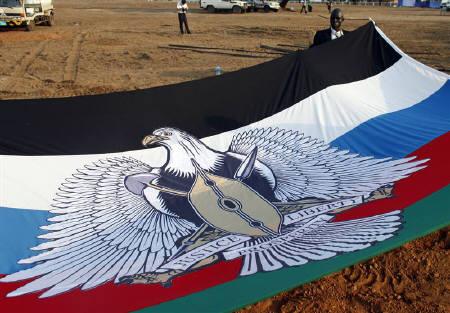
Days before independence, some wrote on some websites asking that Joseph Lagu, not President Kiir, should raise the flag for the new nation, and that prisons should have been emptied for this day.
LAGU AS EX-CAPTAIN
The final achievement was a result of the collective effort of different individuals and groups to varying degrees of success. Nobody should usurp its ownership. Allowing General (Rtd) Joseph Lagu Yanga to raise the Flag would have been an attempt to derail history of South Sudan. It’s good we did not spoil our happiness by useless suggestions.
General (Rtd) Joseph Lagu Yanga unified South Sudan Liberation Movement to bring about Addis Ababa Agreement in 1972. The General has done well to unify the people at the moment. However, we should always have a proper balance sheet for all our public officials. The General (Rtd) elected to ditch his highs in the Liberation Struggle of South Sudan for lows that created divisions among the South Sudanese…those lows culminated to inconsistencies in his achievement. Let’s compare Gen. (Rtd) Joseph Lagu Yanga to an old smart footballer who scored goal(s) in his team that lost a game or to a captain of a team whose victorious glory is not now. Such a striker or a captain cannot be summoned to a podium to receive the trophy even if he were a member of the winning team, he remains a recognised spectator.
The Flag is a trophy which eluded dead and living South Sudanese teams; it was just right that it was raised by the captain that attained it: President Kiir Mayardit. It is one thing to like or dislike a captain of a team and it is another for that captain to lead the same team and win a game. Gen. (Rtd) Joseph Lagu Yanga, hopefully, shed tears of joy like what Jesse Jackson did in 2008 when Barack Hussein Obama triumphantly accepted the nomination of Democratic Party for President of United States of America.
Moreover, Joseph Lagu is both a retired General and Ex-President of High Executive Council. Raising a flag would have required that he returned to active service first. Lagu did a lot in fighting for southern Sudan liberation. Yet, his profile, like with all leaders, should not always seek to present a balanced sheet, so that future generations can pick lessons. In some respects, General (Rtd) Joseph Lagu Yanga undid and watered down his achievements. For instance, he failed the test to become role model because on ascent to power, Lagu started building Makungu Palace and Makungu stopover when Juba Hospital and Nimule Primary School respectively lacked essential medicines and teaching and learning materials, supported Kokora that encouraged President Jaafir Mohamed Nimeri to re-divide Southern Sudan, slowed down and frustrated SPLA recruitment drive in Uganda, and desensitised many youth from Equatoria not to join SPLA at the time of war.
LAGU, ALIER, AND GARANG’S PLACE
Let contributions of Dr John Garang de Mabior, Gen. (Rtd) Joseph Lagu, Mr. Abel Alier and other elders that similarly participated in the Liberation Struggle of South Sudan always be publicly recognized. But the captain of a team should always be allowed to do what a captain does. I think even if Dr John Garang de Mabior had come alive on the 9thof July, 2011 he would still have told President Kiir Mayardit to continue with Proclamation of Independence of South Sudan because that was the very achievement Dr. Garang had wanted. After all, who was more SPLM/A representative than the head of SPLM/A? And what would have been a compelling reason to prevent the SPLM Chairman and SPLA C-in-C not to raise the original SPLM/A Flag — now the Flag of would-be Independent South Sudan?
Some even suggested that security should have been relaxed. Relaxing security during celebration was a red line, and it’s good we didn’t cross that line. I hope we will always remember to not relax security during important functions.
When President Bill Clinton visited Africa in 1998 he did not spend the night in Accra, Ghana because his huge entourage and security detail did not have enough accommodation. South Sudan must always be vigilant to prevent al-Qaida surprise attacks like what happened in Uganda, Tanzania and Kenya. It was `al-Qaida’s money with which al Bashir procured chemical weapons and showered them down on SPLA and residents of camps for displaced in 1996/7. President al Bashir spring-boarded from an Islamic fanaticism and this sometimes influences his actions. He is also an International Criminal Court (ICC) wanted man, and he may be passionate about the Arab and Islamic saying: mot el jamaa erith to enthuse him either to criminalize many people or die with others. It is good security was not only be beefed up in Juba but across South Sudan State Capitals until after celebrations. The disciplined army that moved about to provide protection or guard strategic sites are South Sudanese sons, daughters, mothers and fathers. We should always encourage them to be happy whilst they go about their duty to advise, prevent, caution and apprehend those latent elements within the general public that may have different agendas to disturb the new Republic. The Government of Sudan (GoS) sanctioned assassination of William Nyuon Bany through Southern Sudanese. Thus we should always say and do the right thing to educate the un-educated and uninformed in a bid to create mutual trust that will underpin the building of our new Nation.
Another suggestion that did the rounds before independence was that we should empty all Southern prisons. Prisons are not necessarily punishment centres. The prisons are supposed to be protective and reformatory besides being punitive. If we had emptied them, it would have raised question as to why the prisons were established in the first place. Even during the protracted Armed Struggle there were prisons, though improvised.
I think prison authorities should be allowed to identify and recommend those who are eligible for release and to keep the dangerous ones for their own protection and that of society at large. We should not view big days as short cuts to impunity for criminality and dangers committed.
As we build a new republic, let’s all be happy without any distraction. The New beginning is now.
The author, living in Juba, can be reached at alierayom@yahoo.com