
I do not have complaints. Life is life and we live it. One good thing is that things are not permanent. Everything is temporary. So if anything is bad it always changes and it becomes good. If things are good, bad things also do come. I do not think I will ask God why? I wouldn’t.
DANIEL DENG BOL
In this conversation, ALUEL BOL ALUENG, South Sudan’s first female aeronautical engineer and pilot says she wants to be remembered as someone who always did what made her happy. DANIEL DENG BOL speaks to the girl in the cockpit:–
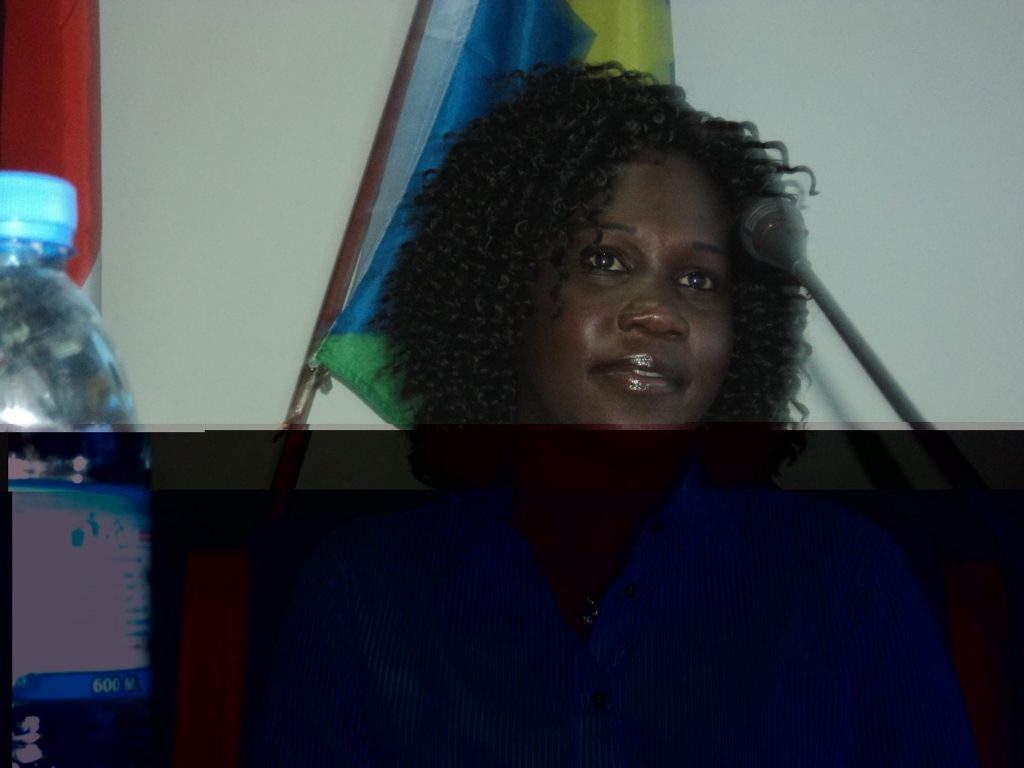
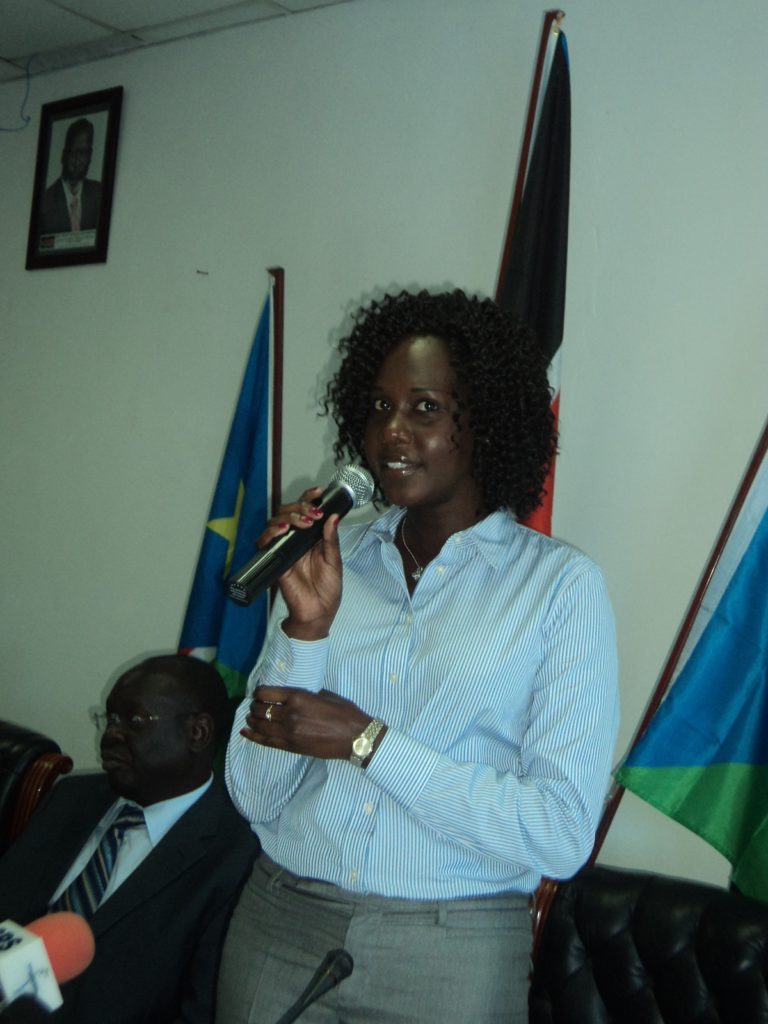
ALUEL: My name is Aluel Bol Alueng from Lakes State, Yirol, my village is Adior. I was born in Malakal in 1983, and I left Sudan in 1989 to Nairobi and left for America in 1992, to Seattle, Washington.
Q. What inspired you to become a plot?
I have always been inspired to become a plot, I think since 1989. I was flying from Khartoum to Nairobi. I fell in in love with the aero plane, flights at the airport. I was just intrigued, and ever since then I said I wanted to become a plot.
Q. Is it very easy to be a plot?
No, it is very difficult, challenging work. It’s a never ending training and there are very high standards set by licensing authorities and also the airline. As pilots we must always live by those rules and regulations and licensing standards.
Q. Did you have a dream, before, of becoming a pilot?
No, it was a plan, definitely. I went to Florida Memorial University in Miami, Florida, and completed my high school and got my bachelors degree in aeronautical science and then after completing, in 2006, I joined Pelican Flight Training center, also in Miami, where I did my professional pilot training courses, instrument reading, commercial license, motor engineering. And after finishing there, I came to Sudan. I was sent to Ethiopia where I joined the Ethiopian Airlines and I was offered a job with them, flying for them for two years. So I was flying throughout Africa and the Middle East on the aircraft, on the 737.
Q. Where exactly and when did you started your first fly?
My first flight was in Miami, Florida. I flew up and down the coast. My first professional flight for work, we left Addis Ababa for Lubumbashi, in Congo, and from there we departed and we went to Harare in Zimbabwe.
Q. What are your challenges being a female pilot in a man’s world?
There are many challenges, definitely, because men feel, in particular, that they are better than women; they just have a competitive age to them. And even in a pilot school, I was the only girl. Even in Miami I was the only girl. And in Ethiopian Airlines we were only six in total. The challenges are not only about being a woman, but also there is being, in the international view, an African-American and black or an African. So there are many challenges for us besides just gender. There is also something to do with color because, internationally, this field is dominated by Caucasians. There are very few people of colour and on top of that we are very few in number as women. So it’s a double minority.
Q. If you were to stop flying what would you like to do for a profession?
I do not think I would choose another profession. If I stop flying I would farm. I would become a farmer.
Q. What have been the most terrifying moments of your life?
I think all of us have challenges, definitely, in life: moving to America, leaving home, leaving Sudan when I was very young; My mum passed away just a month after we arrived in the US, so that was a bad event; trying to work and go to school at the same time; after finishing University my father passing; Having now to deal with life and school and work and pilot training was not easy – was very difficult. I think challenges always come about. It’s how you move through them.
Moving back to Sudan was another big challenge trying to remember and enter society, you know, a world that you left such a long time ago, and then moving to Ethiopia, and moving to Dubai. So definitely many challenges in life.
Q. What period of time would you regret?
Oh, in my whole life I don’t regret a thing.
Q. You don’t regret anything?
I don’t regret anything.
Q. So whole this time you’ve been happy?
No, happy is – I am content. I mean my life is good. In hardship I would live again because everyday l live it for today, not for tomorrow, not for yesterday.
Q. If you are reincarnated as animal, which would it be?
If I were an animal I would be bird.
Q. There are so many birds.
May be an Seagull. Because I love water. They fly high, they enjoy the beach: Seagulls fly very high, and they are always near water. I love water.
Q. Thoughts on life…
I want to be remembered as someone who loved doing things that made her happy. Didn’t care about what society thought about them. I think of life. I choose to live.
Q. If you could ask God one question, what would it be, or what would you complain about?
I do not have complaints. Life is life and we live it. One good thing is that things are not permanent. Everything is temporary. So if anything is bad it always changes and it becomes good. If things are goods, bad bad things also do come. I do not think I will ask God why? I wouldn’t.
Q. What messages would send to other girls?
Do not underestimate yourself. Know the value of yourself as a human being, know value of your self as South Sudanse, and know that all of us, we have a big contribution to do for our society. We should not think work, such as plotting, engineering or computer science, is for foreigners. It is for us.
And to the girls do not let your gender limit you; don’t try your best to better than the boys. Try your best to be better than your self everyday. Your are not competing just against the boys but you competing against yourself. And if you are competing against yourself, the results will show, definitely.
Q. People say you are the pride of South Sudan. What does it mean to you?
Is an honor definitely. When I started flying or living my life, I never thought that — I was not trying to achieve something to be the first female pilot or whatever. so it’s an honor. It’s just an honor. I’m grateful and thankful that many people can share in my success because it is not only my success. It is my family success, my friends’ success, my village success, it’s our success.
Aluel proves that girls are competent in sciences, say Makana, Lasuba
Transport Minister Anhony Makana and Gender Minister Agnes Lasuba have said the first South Sudan female pilot proves that girls can handle tough science based careers, as the latter called on the Education ministry to establish a special girls scholarship.
Makana said many pessimistic things have been said about South Sudanese and this generation is to prove them wrong.
Makana said Aleul, a staffer in the ministry, is well trained to handle planes of four engines.
Makana said Bol has flown to many countries in Africa such as South Africa, Angola, Zimbabwe, Ethiopia, Eritrea, and Dubai.
“We are working very closely with her to establish a route from Dubai to Juba,” said the minister.
Makana said that these days you don’t judge the things by the size of their cover but you judge by the brain.
Aluel James Bol, the first South Sudanese female pilot said she was not inspired by anyone to do piloting.
But her dream started when she was 5 years old in 1989, the year she left — in love with the air port and air craft. “I, therefore, asked my father to buy for me one [toy] aircraft, and that is how i joined the school of piloting,” Bol said.
Aluel said she has found challenges not only as a female pilot but also as black. “I find challenges everywhere I go, even when i am on the stage,” she said.
Gender Minister Agnes Lasuba said that It has been a theme that girls cannot do science subjects, but Aluel’s case proves that girls can be engineers, pilots, and handle any science subject. Lasuba said the ministry of Higher Education should ensure that those girls who excel and their parents have no opportunities to make them go through school should be given special scholarships. “They cannot be discarded because they will also contribute to the nation building,” Lasuba said. “These should be one of our priorities now as we start to build the new Republic of South Sudan.”