
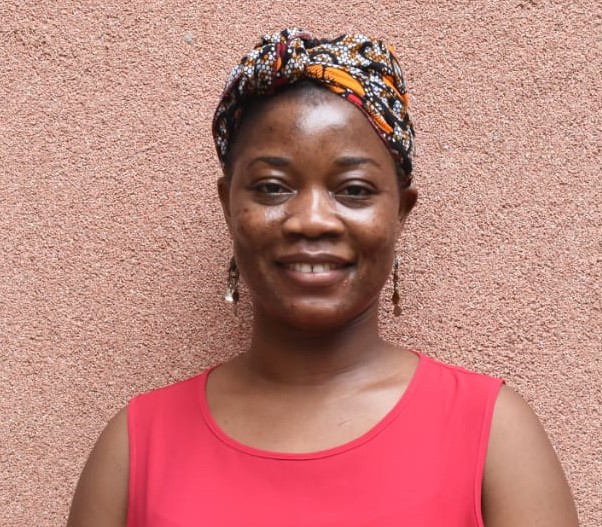
JACKLINE BAGA sits down with JENIFER JAMES to talk about youth, generally, and Let Girls Talk club. Growing up in a family of twenty children and feeling that it was an injustice that girls’ voices were not considered in family decision making inspired Baga to start the club. She is also founder, Young women Christian Association (YWCA)
JENIFER JAMES
This reporting is sponsored by the Norwegian People’s Aid as part of the Female Journalists Network to increase women’s voices in the media. Badru Mulumba is project editor
JENIFER: There have been reports of an attack by youth on the employees of NGOS around the country. So, you are talking about the youth contribution in this country, yet they are perpetuating violence!
JACKLINE: Most of the conflicts are spearhead by young people because young people are idle; they don’t have what to do. At times our leaders, politicians, take advantage of their idleness and instigate them to fight against one another. To some extent, it is tribal. Growing up without getting exposed or without travelling, you only know that ‘This is my clan, this is where I come from, and this is how things should be’. If young people are not exposed, it becomes a challenge for them to be accommodative of other cultures and to be open-minded. Of course, there are ways to see that young people do away with this kind of situation: empowering young people, organizing dialogue on peace building and peaceful coexistence in a community, and engaging young people in activities, such as, entrepreneurship so that they can focus on performing activities that benefit them and the community.
Political leaders have their interests because they know that the large population is young people. If they want to have more people join their political parties, they go through young people to influence them. The the poor, young people, are at times not really aware of the interest of those instigating them to fight. So they end up taking sides without knowing and creating harm and violence to the community.
What could be your advice to those youths who involve themselves in such acts?
As a young person, what I could say is that this is not how we are. Young people have a power to change and ensure that nobody influences them to go and fight and die. We could do best, if the young people who have taken part in violence decide to join hands and start a cooperative farm, where by they cultivate or engage in more productive activities, rather than fight, put down guns or spears and resolve conflict through dialogue.
Then those influencing them will give up. The influencers don’t have their families inside the country and take advantage of young people who are idle, who do not have access to school, don’t have school fees, and are unable to take care of themselves, while their children study abroad.
Can you tell us more about Let Girls Talk – I understand you’re the founder of that
Let Girls Talk program was formed in 2016 right after the war hit South Sudan badly. You find that most of the families flew to neighbouring countries and the girls were left idle and have no access to things like sexual and reproductive health. Many started getting pregnant and then there was an increase in girl dropouts from school
This is when I came out and said, may be something that we don’t know is that it is not easy – we do not sit down with girls and understand their problems.
The idea was to have a safe space where girls could come together to share their challenges and experiences- how does it feel to be a girl in a conflict society? How is it possible for them to access public events where people sit and discuss tissues that matter to the nation? Do they feel that it is important? Can they access those spaces?
We could only do that through safe space conversations, where only girls sit and talk. So the Let Girls Talk initiative also focusses on mentorship, to talk to girls, to mentor them and ask them: what do they want to become? What do they aspire for most? They sit with the mentors, mentors share their experiences, and the girls get inspired by the mentors. Then we also establish a relationship where the girls can connect and reach out to the mentors freely without being judged about specific issues, things to do with – you know we talk about boyfriends as well.
When they start having boyfriends, they think they are the first people to be in love. Those are the periods where they make wrong decisions. And if they don’t have open conversations with people who are their age and move ahead, their lifetime tends to be really disorganised as young as ages 12, 14, 15, 16. So we have conversations such as those. At times we invite nice, handsome guys just to talk and then guys will say, for me if I am looking at a girl, this is the type of girl.
You pay attention to the tone of guys. Not every guy who says that he loves you does. If a handsome guy comes and sits in a room and tells you that, ‘You know my ideal woman in the future must be this kind of a woman’, than she will start thinking critically about herself. Does she really fit in such kind of a category?
We also discuss leadership. We ensure that young people should start aspiring for political leadership. They are already leaders in their different homes. Recognising this leadership in themselves at a young age is important. They need to know how to drive decision making in their family and then move this decision making from household to community. We also talk about access to sexual reproductive health and rights and then harassment.
How can girls know that they are being harassed?
Some girls may think it is when a guy is forcing himself on her because they do not understand that for a guy to blink his eyes at you is already harassment. A guy greeting you and tipping your hands is harassment. So they need to be aware of these things. If someone comes and touches you in a place where you do not feel comfortable, you raise your voice and say, I don’t like what you’re doing and don’t feel comfortable in you doing that to me.
As a result of that there are quite a number of girls that have had changed stories, positioned themselves to remain focused and return to school. So, basically, we have more than about five hundred girls that are part of Let Girls Talk, in Yambio, Maridi and Juba .
Have all these girls succeeded?
Not all the girls are successful. Others will join and when they go back, may be boys also see them, that there are changes in their attitudes because once you benefit from the group, you begin questioning, you begin asking tough questions. And guys are, like, Oh! Now you have been attending this meeting of girls, now you are becoming a big headache. Some boys start avoiding them and some girls let themselves be spoiled.
But others become very successful in a sense that some girls who have been in the process of being married at an early age, after sharing their experiences with their fellow girls who were forcefully gotten into marriage, how difficult it was, and they have reversed their marriage and returned to school.
We link other girls up to opportunities through Young Women Christian Association (YWCA) to attend trainings. With Covid 19 it has become difficult, but also those who had opportunities, we bring them to YWCA to participate in online events, to share their experiences on how Covid19 has impacted their lives and how difficult things happened and how we see it as an opportunity to start more businesses.
Who is your role model?
My role model was two ladies in our community. Then, it was Mode Zagabaraka who created a space for girls and women to discuss their issues and way forwards, and Christine Bazanda, a gender activist who speaks for girls and women’s rights in the community. I decided to follow the two.