
HomeLIVING IN SOUTH SUDANKnow irony? It's Blacks...

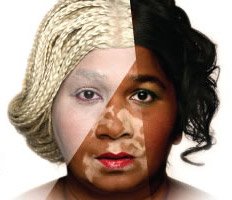
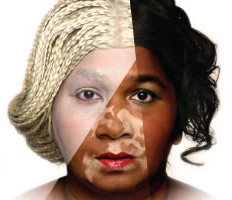
Know irony? It’s Blacks skin-bleaching, while whites sun-tan

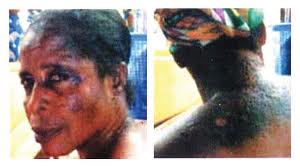
The more one bleaches the uglier one becomes because you become 50 percent light, 50 percent dark — Fanta and Coca Cola (lighter on the face, darker on the legs.
ASANTEWAA LO LIYONG

Columnist
My closest friend is about to go for her traditional wedding. The family is pressuring her to ‘beautify’ herself, because she is, after all, an ‘Arosa’ (bride) and they should be princesses on their wedding days.

This definition of beauty means they must be light, Arab-white or Kawaja white.

They have told her that she is not a real bride because she’s still with her dark natural skin.

Is this the bride, some asked? Why does she look like this (dark, natural)?

I told her that should she even attempt it for that one day I will disown her.

Her fiancé backed me.

They wanted her to bleach for her wedding day only, (one day?).

What happens to the wedding photos and how do you explain to friends that the light skinned woman on the pictures is actually you?

I’ve seen numerous photos at some houses where a photograph shows the husband with a light, almost white-skinned woman and then, the following day, the wife appears and she bears no resemblance to the woman in the picture.    

Pressure? Racism? Caving to bullying? People bleach for all sorts of reasons.

A LEGACY OF SLAVERY

From India, to Mali,, China to Sudan, South Africa to Congo, Pakistan to Senegal: it’s bleaching every day, every hour. It’s the legacy of slavery and colonization. Lighter skin or white people received all the privileges over hundreds of years. The lighter you are the higher your status socially and economically.

In some places, the lighter you are, its perceived the more successful you are or the more beautiful you are. Marketers and advertisers do not make the situation easy, they portray messages that state the lighter you are the prettier you are and handsome you are. They are also aware of the impact a black or white face on package can have on sales.

DIVERSITY BETTERS THE WORLD

We were all born different for a reason. Diversity makes the world a better place.

Our complexions were made so by God for a good reason, due to climate, environment, and possibly our food. Darker skin is best suited for hot and humid climates while lighter skin is suited for cold weather.

Many skin lightening creams are imported from countries where regulations are not enforced and have a high mercury and hydroquinone content.

Mercury is known to cause poisoning that leads to kidney failure.

Hydroquinone lights the skin color by killing the melanin, destroying the top layer of the skin that protects us against the sun rays, putting us to risk of cancer, and causing ochronosis, in which the skin becomes darker and thicker, with dome-shaped yellowish spots and grayish-brown spots. After discontinuing skin lightening creams, the skin becomes darker than its original colour.

Some women and men become psychologically addicted to the creams. Creams don’t only destroy the complexions but also self-esteem.

Why some someone would go to such extremes to be “beautiful” – a relative thing.

Aren’t we all beautiful in need of accepting the way God made us confident and learning that if God didn’t know what he was doing he would have made us different.?

FUELING LOW ESTIMATE

Skin bleaching can be done by injection, pill, creams, and surgery.

Hair salons in South Sudan are even providing injections to women to bleach themselves.

With no government regulations in the market, anybody can become a dermatologist,  which is rather dangerous.

The original or medical use of lightening creams was to treat conditions such as freckles, dark spots, hyperpigmentation, melasma, acne spots, and skin discoloration.

However, it has been turned into a self ‘beautification’, and fuels the souls of people with low self-esteem. 

Sadly no matter how much you change the outside if you don’t change the inside you are still the same. The more one bleaches the uglier one becomes because you become 50 percent light, 50 percent dark — Fanta and Coca Cola (lighter on the face, darker on the legs).

The irony is that ‘black’ people go to bleach while ‘white’ people go to suntan to become darker.

WHY? OH, WHY?

Why should I bleach my skin if tomorrow my children will still be born black?

Why should I bleach my skin and walk around smelling like a dead animal and get sun burnt.

Why would I risk my health and get skin cancer or other skin diseases for the sake of beauty?

I am who I am and God made me beautiful despite my complexion and if people’s acceptance depends on my skin complexion so be it.

So, to bleach or not to bleach? I posed the question to fellow countrymen and women?

Kiden 28

Hating the skin you’re born with so much that you would rather put it off. Its denying your true identity, your light your mother and father are black and your children.

Bianca 28

It should be done away with, its not good, it destroys peoples skins, and they look ugly. The dark skin helps you from the heat but when you bleach your skin is not protected. Cosmetics sold in the market should be regulated, they bring the products and don’t inform of them of the risks, in their country they work well but here because there is no information they take chances.

Awareness campaigns need to be done to inform people of the products their using the good and the bad.

Winny 27

Should be discouraged and its going against nature. People should appreciate how God created them. It has a lot of consequences, such as skin diseases. Its taking off your first layer of skin.

Agok 31

I hate it.

Nyakur 28

It’s a sense of insecurity, thinking they will become beautiful.
- A word from our sponsors -

sponsored: GRE. GMAT. TOEFL. IELT CLASSESspot_img

Most Popular

More from section

More Courage Than Before: Female Monitors Strengthening Early Warning Systems in South Sudan

Simona Ali, an Early Warning Monitoring Fellow from Wau, says the fellowship created a space for female journalists to share experiences and learn from each other. By passing this knowledge on to colleagues in her newsroom, she is helping strengthen awareness of journalist safety and professional rights

Speaking Up for Rights: Female Monitors Strengthening Early Warning Systems in South Sudan

Catherine Adut, an Early Warning Monitoring Fellow from Lakes State, says the fellowship helped her understand her rights and speak up against unfair treatment. Today, she encourages other female journalists to report harassment, defend their rights, and support one another in the newsroom.

Confidence to Stand Up: Female Monitors Strengthening Early Warning Systems in South Sudan

Viola Nyoka, an Early Warning Monitoring Fellow from Yei, says the fellowship helped her understand the risks female journalists face and the importance of speaking up. Through shared experiences with colleagues across South Sudan, she gained the confidence to challenge exploitation, report harassment, and stand up for her rights in the newsroom.

Knowing Where to Turn: Female Monitors Strengthening Early Warning Systems in South Sudan

Vivian Nandege, an Early Warning Monitoring Fellow from Yei, says the fellowship helped her understand where to seek support when facing challenges in journalism. Through connections with other female journalists, she has gained confidence, shared knowledge, and built a stronger professional network.

- A word from our sponsors -

spot_img

Read Now

More Courage Than Before: Female Monitors Strengthening Early Warning Systems in South Sudan

Simona Ali, an Early Warning Monitoring Fellow from Wau, says the fellowship created a space for female journalists to share experiences and learn from each other. By passing this knowledge on to colleagues in her newsroom, she is helping strengthen awareness of journalist safety and professional rights

Speaking Up for Rights: Female Monitors Strengthening Early Warning Systems in South Sudan

Catherine Adut, an Early Warning Monitoring Fellow from Lakes State, says the fellowship helped her understand her rights and speak up against unfair treatment. Today, she encourages other female journalists to report harassment, defend their rights, and support one another in the newsroom.

Confidence to Stand Up: Female Monitors Strengthening Early Warning Systems in South Sudan

Viola Nyoka, an Early Warning Monitoring Fellow from Yei, says the fellowship helped her understand the risks female journalists face and the importance of speaking up. Through shared experiences with colleagues across South Sudan, she gained the confidence to challenge exploitation, report harassment, and stand up for her rights in the newsroom.

Knowing Where to Turn: Female Monitors Strengthening Early Warning Systems in South Sudan

Vivian Nandege, an Early Warning Monitoring Fellow from Yei, says the fellowship helped her understand where to seek support when facing challenges in journalism. Through connections with other female journalists, she has gained confidence, shared knowledge, and built a stronger professional network.

Strengthening Professional Networks: Female Monitors Strengthening Early Warning Systems in South Sudan

Cecilia John Akile, an Early Warning Monitoring Fellow from Wau, says the fellowship helped her build stronger professional connections with journalists across South Sudan. Through the network, she has learned the importance of speaking openly about challenges and collaborating with colleagues to find solutions

Standing Firm Under Pressure: Female Monitors Strengthening Early Warning Systems in South Sudan

Assunta Aluel, a journalist from Twic County, says the Monitoring Fellowship helped her remain calm and professional when she faced questioning after reporting a sensitive community story. The training equipped her with the confidence and knowledge to navigate pressure while continuing her work.

Building Stronger Connections: Female Monitors Strengthening Early Warning Systems in South Sudan

Aleng Vicky, an Early Warning Monitoring Fellow from Torit, says the fellowship helped female journalists across Eastern Equatoria connect and share experiences. Through new communication platforms and peer discussions, women journalists are building stronger networks and supporting each other in the profession.

From Connection to Courage: Female Monitors Strengthen Early Warning Systems in South Sudan

"At the back of your mind, when covering news, you must remember there are things you must follow while doing this. That has instilled more confidence in us than before." - ARICH DENG

Forging a Lifeline: Female Monitors Power Early Warning Systems in South Sudan

An early warning system fellowship empowers frontline monitoring fellows to detect risks early, trigger rapid response, and strengthen protection support for those facing threats.

The Mic Was Silenced: A Young Female Journalist Struggles to Reclaim the Airwaves in South Sudan

They shut it down after a song—just a traditional tune from the wrong community—played during a flare-up in local fighting. Officials stormed in, seized the keys, and warned the staff: One more mistake, and the whole station is gone for good. For a moment, Achol was jobless...

 “If You Don’t Have the Heart for It, You Can’t Carry On”

As a child, she fled bombings by the Sudanese government and attacks by the Ugandan rebel Lord’s Resistance Army, living a refugee live in DR-Congo, CAR, and Uganda. As a woman, she faced down militias. Today, she stands at the frontline of media freedom in Western Equatoria...