

HomeNEW REPUBLIC.Where's Oil Money Going,...

Where’s Oil Money Going, US says as it Conditions Aid to South Sudan

RICHARD SULTAN

The United States is linking more financial aid to South Sudan the increased transparency in oil money spending, a senior American official has said.

Transparency in oil revenue is part of a package of reforms that the International Monetary Fund is demanding before further support to the country. The Fund declined to fund the country when officials visited DC recently right after the Finance minister told the media that the government had sold off the oil up to 2027, leaving it incapable of paying teachers.

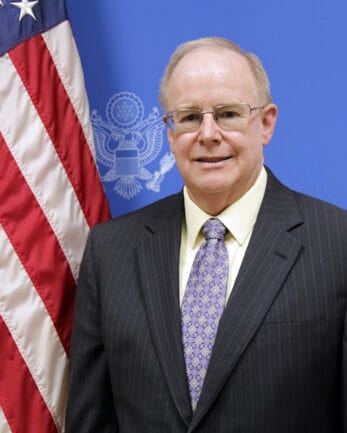
“Of interest to the international community, and particularly to the US, is how the revenue from the oil is managed,” Charge d’affaires David Renz said this June 2 in chats with journalists as he departed for the US at the end of his tour of duty.

The government, Renz added, should embrace the International Monetary Fund reforms, if money is to continue to flow in to support the development of the country. Renz said that the US wants to treat South Sudan as a partner that can contribute to its own development activities, instead of focusing on the humanitarian side of things.

“As things stand, that is not possible because the government can’t meet its development goals and humanitarian needs,” Renz said. “That is why the US is giving millions of dollars annually for humanitarian support.”

ENOUGH GUNS TO INTEGRATE REBELS

The official said that the US supports the renewed UN arms embargo on South Sudan to force the parties to stick to the peace. South Sudan excuse for not integrating rebel forces into the national army is that it lacks firearms for the fighters because of the arms embargo

“The arms embargo has reduced the ability of the warring parties to launch attacks and (forced them to) stick to the agreement, though at a slow pace,” Renz said. “There are actually enough guns in this country to graduate the unified forces. What is lacking is only political will”.

The parties agreed on the military command structures in April, but the former rebel fighters have been left out to pasture after the training, with government saying that it didn’t have the arms to give them. As Renz spoke, the UN was calling for faster implementation of milestones of the peace agreement.

“Time is of the essence in view of the looming end of the transitional period,” Nicholas Haysom, the Special Representative of the Secretary-General said at the JMEC meeting June 2. “To underline our main concerns, the government and the parties must work with a sense of urgency to: Pass the constitutional making process bill, graduate the first batch of the NUF and progress the 3 April agreement, (and) Work with NCAC to expediate the National Elections Bill process.”

- A word from our sponsors -

sponsored: GRE. GMAT. TOEFL. IELT CLASSESspot_img

Most Popular

More from section

More Courage Than Before: Female Monitors Strengthening Early Warning Systems in South Sudan

Simona Ali, an Early Warning Monitoring Fellow from Wau, says the fellowship created a space for female journalists to share experiences and learn from each other. By passing this knowledge on to colleagues in her newsroom, she is helping strengthen awareness of journalist safety and professional rights

Speaking Up for Rights: Female Monitors Strengthening Early Warning Systems in South Sudan

Catherine Adut, an Early Warning Monitoring Fellow from Lakes State, says the fellowship helped her understand her rights and speak up against unfair treatment. Today, she encourages other female journalists to report harassment, defend their rights, and support one another in the newsroom.

Confidence to Stand Up: Female Monitors Strengthening Early Warning Systems in South Sudan

Viola Nyoka, an Early Warning Monitoring Fellow from Yei, says the fellowship helped her understand the risks female journalists face and the importance of speaking up. Through shared experiences with colleagues across South Sudan, she gained the confidence to challenge exploitation, report harassment, and stand up for her rights in the newsroom.

Knowing Where to Turn: Female Monitors Strengthening Early Warning Systems in South Sudan

Vivian Nandege, an Early Warning Monitoring Fellow from Yei, says the fellowship helped her understand where to seek support when facing challenges in journalism. Through connections with other female journalists, she has gained confidence, shared knowledge, and built a stronger professional network.

- A word from our sponsors -

spot_img

Read Now

More Courage Than Before: Female Monitors Strengthening Early Warning Systems in South Sudan

Simona Ali, an Early Warning Monitoring Fellow from Wau, says the fellowship created a space for female journalists to share experiences and learn from each other. By passing this knowledge on to colleagues in her newsroom, she is helping strengthen awareness of journalist safety and professional rights

Speaking Up for Rights: Female Monitors Strengthening Early Warning Systems in South Sudan

Catherine Adut, an Early Warning Monitoring Fellow from Lakes State, says the fellowship helped her understand her rights and speak up against unfair treatment. Today, she encourages other female journalists to report harassment, defend their rights, and support one another in the newsroom.

Confidence to Stand Up: Female Monitors Strengthening Early Warning Systems in South Sudan

Viola Nyoka, an Early Warning Monitoring Fellow from Yei, says the fellowship helped her understand the risks female journalists face and the importance of speaking up. Through shared experiences with colleagues across South Sudan, she gained the confidence to challenge exploitation, report harassment, and stand up for her rights in the newsroom.

Knowing Where to Turn: Female Monitors Strengthening Early Warning Systems in South Sudan

Vivian Nandege, an Early Warning Monitoring Fellow from Yei, says the fellowship helped her understand where to seek support when facing challenges in journalism. Through connections with other female journalists, she has gained confidence, shared knowledge, and built a stronger professional network.

Strengthening Professional Networks: Female Monitors Strengthening Early Warning Systems in South Sudan

Cecilia John Akile, an Early Warning Monitoring Fellow from Wau, says the fellowship helped her build stronger professional connections with journalists across South Sudan. Through the network, she has learned the importance of speaking openly about challenges and collaborating with colleagues to find solutions

Standing Firm Under Pressure: Female Monitors Strengthening Early Warning Systems in South Sudan

Assunta Aluel, a journalist from Twic County, says the Monitoring Fellowship helped her remain calm and professional when she faced questioning after reporting a sensitive community story. The training equipped her with the confidence and knowledge to navigate pressure while continuing her work.

Building Stronger Connections: Female Monitors Strengthening Early Warning Systems in South Sudan

Aleng Vicky, an Early Warning Monitoring Fellow from Torit, says the fellowship helped female journalists across Eastern Equatoria connect and share experiences. Through new communication platforms and peer discussions, women journalists are building stronger networks and supporting each other in the profession.

From Connection to Courage: Female Monitors Strengthen Early Warning Systems in South Sudan

"At the back of your mind, when covering news, you must remember there are things you must follow while doing this. That has instilled more confidence in us than before." - ARICH DENG

Forging a Lifeline: Female Monitors Power Early Warning Systems in South Sudan

An early warning system fellowship empowers frontline monitoring fellows to detect risks early, trigger rapid response, and strengthen protection support for those facing threats.

The Mic Was Silenced: A Young Female Journalist Struggles to Reclaim the Airwaves in South Sudan

They shut it down after a song—just a traditional tune from the wrong community—played during a flare-up in local fighting. Officials stormed in, seized the keys, and warned the staff: One more mistake, and the whole station is gone for good. For a moment, Achol was jobless...

 “If You Don’t Have the Heart for It, You Can’t Carry On”

As a child, she fled bombings by the Sudanese government and attacks by the Ugandan rebel Lord’s Resistance Army, living a refugee live in DR-Congo, CAR, and Uganda. As a woman, she faced down militias. Today, she stands at the frontline of media freedom in Western Equatoria...