
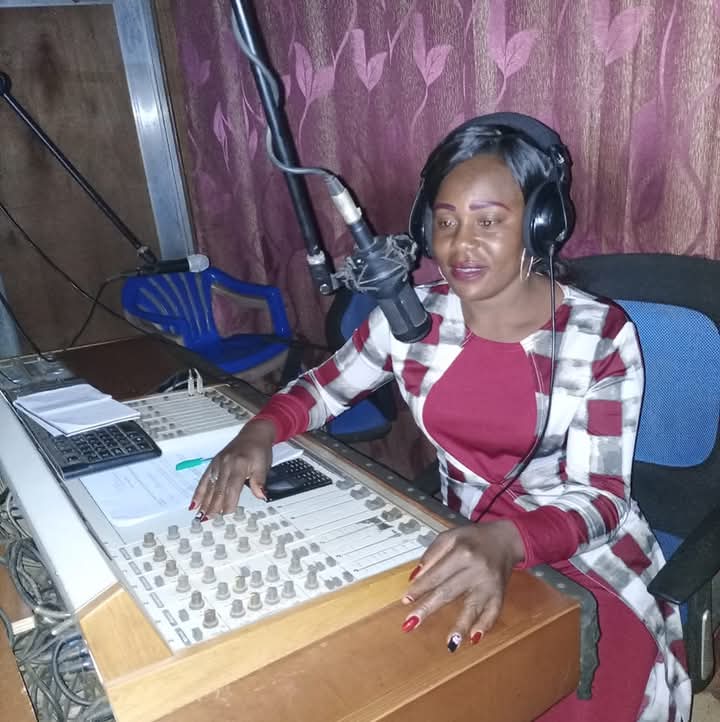
As a child, she fled bombings by the Sudanese government and attacks by the Ugandan rebel Lord’s Resistance Army, living a refugee live in DR-Congo, CAR, and Uganda. As a woman, she faced down militias. Today, she stands at the frontline of media freedom in Western Equatoria State, stopping harassment and navigating a profession that remains deeply dangerous for women. In this Independence Week, journalist Florence Gume reflects on her journey through trauma, survival, and defiance—and the high cost of telling the truth:-
“Journalism is not for the faint-hearted.
If you don’t have the heart for it, you can’t carry on.”
– FLORA GUME
BETTER OUTCOME: How did you find your way into journalism?
GUME: I didn’t set out to become a journalist. After high school, I was just idle. My uncle, a bishop, asked me what I was doing. I said, “Nothing.” He said, “Then go study journalism.” He didn’t ask about my dreams or interests. He just decided. And I said, “No problem.”
BTO: You were twenty-five at the time. Did that feel late to start?
Not at all. I’ve always believed age doesn’t matter—only your mind does. And honestly, I was ready. I was a bright girl. I’m still happy I said yes.
BTO: Did your uncle have any connection to the media?
No, not at all. He’s not a journalist. But maybe he saw something in me—something about helping the community, educating people, sharing information. I’ve never asked him why he chose that path for me.
BTO: Once you started the course, did you ever second-guess it?
Absolutely. At one point, I wanted to quit. The challenges were real. I saw how other journalists were being treated. I thought, Why am I doing this? But then I’d remember my uncle. If I left, what would I tell him? He might never support me again. Journalism is not for the faint-hearted. If you don’t have the heart for it, you can’t carry on.
BTO: You were training in a region once affected by the LRA insurgency. How did that shape your experience?
During the time of the LRA, I was schooling in Uganda. I returned home for holidays, and the night I arrived, they attacked—even the Catholic church premises. We ran into the bush. We stayed there for days until the government regained control. I had to return to Uganda for safety.
BTO: When you say you ran, what was that like?
It was night. We fled on foot into the bush. We walked until morning. I had a small bag—I didn’t even know what was inside. They were shooting in every direction. We were many. We hid in the bush, and eventually, we heard government announcements on the radio calling people to return.
BTO: You joined journalism at a critical time for Western Equatoria and for women in media. What are the toughest challenges you’ve faced as a female journalist?
Harassment is a big one—both online and offline. There is physical and sexual violence. There’s bias in how we are represented and treated in decision-making. Even within media houses, there’s discrimination against female journalists.
BTO: What is the most frightening experience you’ve faced while reporting?
In 2014, during the SSLM rebel presence in Biche. The Mayor of Yambio went to meet a rebel leader. I went with the team. The rebels surrounded us with heavy guns. I didn’t see the leader, but I knew he was nearby. I was recording while shaking. If anything had gone wrong in that meeting, I don’t know what would have happened. I took time off after that.
BTO: What is the worst abuse you’ve personally faced?
The worst is sexual assault, especially from male colleagues. They see us as women first, not as fellow professionals. They think you should go with them, not work beside them. It’s deeply damaging. And you don’t know the person’s health status. Being assaulted isn’t just a violation—it’s a danger to your life.
BTO: Do you face this more from colleagues or from the people you cover?
From colleagues, not sources. The people we cover tend to behave when they see a recorder or camera. But inside the newsroom, the danger is real.
BTO: As a monitor, you support other female journalists. How do you navigate the need to hold people accountable and still protect those under threat?
Sometimes, I get anonymous calls, warning me to back off or face consequences. It’s a difficult space to occupy. I listen to colleagues. I try to respond. But the threats are real.
Q: What other challenges do female journalists face in Western Equatoria?
Transport and facilitation are a problem. It’s hard to go verify stories. And sometimes, communities reject you. They ask, “Why her? Why not someone from our radio station?” You don’t know what people think. Some may plot against you.
Q: What happens when the system fails you?
We don’t have a strong, united female journalists’ network in the state. There are national organizations, and I attend meetings, but there’s no real grassroots support. When something happens, we share it in groups and hope someone responds.
Q: You mentioned that knowledge and skills are still lacking. Who lacks them—the journalists or the abusers?
The female journalists themselves. I went to school, but many haven’t. What we need is more opportunity to learn, grow, and build our skills.
Q: Let’s talk about how you grew up. How has your childhood influenced your journalism?
I grew up in a family of teachers. My mother and father were both educators. I’m the firstborn. I had two sisters and two brothers, but one died. I was lucky. While others stayed home, I went to school. But war disrupted everything. We fled to the Central African Republic, then to DR Congo. Those were miserable times.
Q: How was the experience in CAR?
Terrible. We lived in a house with no food. There was no refugee camp. Eventually, we returned home, only to flee again.
Q: What was the journey to Congo like?
It could take a week. We walked all day, slept anywhere at night. I was seven. Sometimes I was carried, but often I had to walk.
Q: How was life in Congo?
It was hard. Being a refugee is not easy. UNHCR gave us rice and maize, which we had to pound and soak for days. My auntie found work and eventually started a local eatery. That changed our lives a bit.
Q: Were your parents with you?
No. My mother and other siblings ran in a different direction. My father was in Khartoum doing teacher training. We reunited later. By 1995 or so, there was some peace, and we came back to Yambio.
Q: How have those experiences shaped your work?
They taught me resilience. I’ve lived in Uganda, CAR, Congo. I understand different people and cultures. I speak Lingala, French, some Ugandan dialects, English, and Arabic. Journalism is about communication, and that background helps me a lot.
Q: You’ve also experienced violence as a woman. Would you like to talk about that?
Yes. Two years ago, I was beaten so badly that my head swelled, my eyes shut. I was bleeding. I had to be rushed to the hospital. The police said if I had arrived a few hours later, I would have died.
Q: Was that violence linked to your work?
Yes, in a way. Journalism is demanding. I leave early and return late. That caused friction at home. He didn’t understand. He would call and question where I was. One day, it escalated. We argued, and he beat me badly. I couldn’t work for a week. My life was upside down.
Q: How did you respond afterward?
I was ready to separate. My mother called his family. They asked me to forgive him and promised it wouldn’t happen again. We sat and talked. Since then, he hasn’t repeated it.
Q: How do you feel now?
I feel okay now. I have no problems at the moment.
Q: What message do you have for female journalists during the World Press Freedom Day month?
Focus on your job. Build your skills. Uphold ethics and professionalism. These are tools that will help us fight harassment, both online and offline. Empower yourself. Keep going, even when it’s hard.
- The designations employed and the presentation of material throughout this article do not imply the expression of any opinion whatsoever on the part of UNESCO concerning the legal status of any country, territory, city or area or its authorities, or concerning the delimitation of its frontiers or boundaries. The author(s) [is/are] responsible for the choice and the presentation of the facts contained