
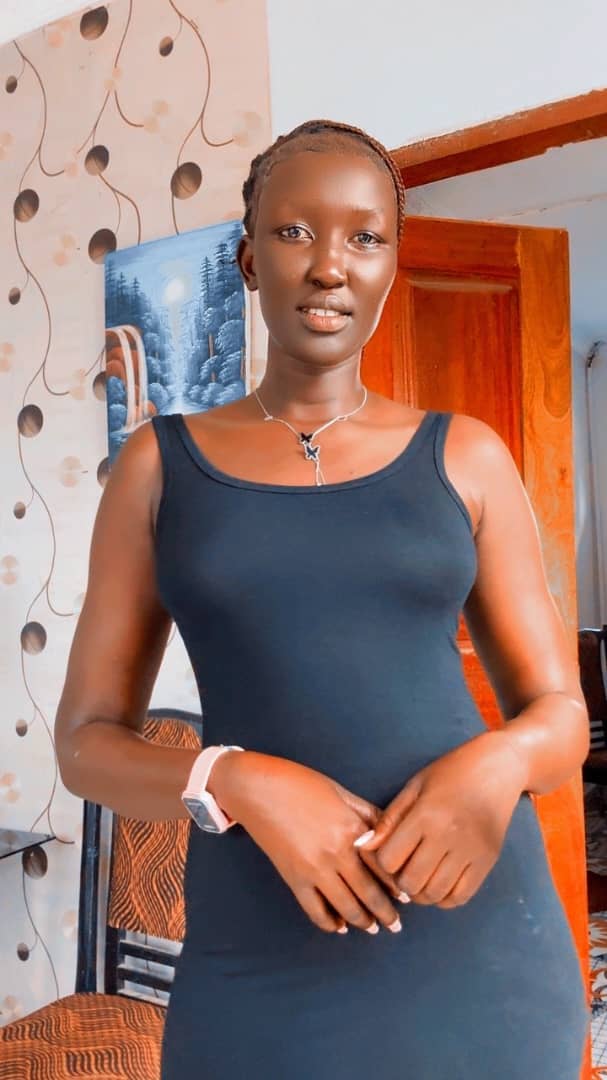
They shut it down after a song—just a traditional tune from the wrong community—played during a flare-up in local fighting. Officials stormed in, seized the keys, and warned the staff: One more mistake, and the whole station is gone for good. For a moment, Achol was jobless and silenced and out of a key livelihood when she joined a small fellowship for female journalists. She didn’t know it yet, but that circle of support would teach her what no newsroom ever had: how to survive not just censorship, but the weight of being a woman with a microphone broadcasting to a population that still doesn’t want to hear her voice. Today, she’s back. Not just on air—but in charge. ACHOL JOK, 23, Ag. Station Manager, Jonglei Radio, spoke to The Editor & to DEBORAH YAR before and after the station reopened last month
TIME: Since the radio reopened, what is the situation like for you now, both as a person and as a journalist? Has anything changed between before the shutdown and now?
ACHOL: I can say we’re working as usual, yeah. But the thing is, when they gave us the keys, they said, You people should be careful. The new people should be careful. They warned us that if they hear anything again—something like what happened before—they won’t just close the radio. They said they’ll take the whole station to their place, do the monitoring there, and we’ll have no control. So we’re working, but under pressure.
TIME: Briefly, tell me what happened when the station was shut down.
ACHOL: When the station was shut down—yes—it was really discouraging. People in the community and even in our own homes were affected. We were off air, and there were so many things we used to offer the community. People were complaining. We couldn’t give the services we used to. It was really hard. After some time, they opened it again. We’re working now, but during that time, it was difficult to even believe in ourselves.
TIME: You personally—how did you feel during that time?
ACHOL: I felt bad. Really bad. We admit that the song that was played shouldn’t have been aired, even though it was unintentional. Being off air hit me hard. I work here as a female journalist—I present women’s voices, call them to the studio, let them share their problems, and together we try to find solutions. When the station was shut, they would come or call me saying, What’s wrong with you people? But all I could say was, They are still doing investigations. It was hard to explain.
Being off air hit me hard. I work here as a female journalist—I present women’s voices, call them to the studio, let them share their problems, and together we try to find solutions. When the station was shut, they would come or call me saying, What’s wrong with you people? But all I could say was, They are still doing investigations. It was hard to explain.
TIME: What was your biggest fear while the station was off air
ACHOL: My biggest fear was that I couldn’t deliver the message I always give to the community. It was really affecting them in one way or another. Not being able to reach them was a big challenge. There were also other things going on because of the shutdown.
TIME: What was the issue with the song that was played?
ACHOL: It was a community song—a traditional song. It was already on the computer, part of the playlist. It used to play regularly. But by coincidence, there was fighting going on in Touch that day, and the song happened to be from one of the communities involved. No one was actually in the studio at the time—it just played on its own. The song mentioned that people from one community were fighting in Touch, but it was a collection of songs from that entire county, not a song from just one clan. These were traditional songs sung for celebrations long before any fighting started. People said, Why did you play a song from that community when they were fighting the other one? But the song didn’t even mention the other community. It wasn’t meant to offend anyone.
TIME: When you lost your job, what did it mean for you and your family?
ACHOL: It was really hard. I couldn’t provide for my family anymore. Even the small things we rely on to survive—I couldn’t get them. That time was very difficult.
TIME: You attended a psychosocial support fellowship before the station reopened. How did that help you?
ACHOL: It really helped me. I got to sit down and reflect, interact with other people who had problems, and I learned a lot. Before that, I didn’t know who to go to when I faced challenges as a female journalist. Through the fellowship, I learned who I could turn to, and what I should do.
TIME: Have you noticed any changes in yourself since joining the fellowship?
ACHOL: Yes. It has really changed me. I’m not the same as I was before. I’ve gained a lot in this journey—things I didn’t know, now I know. Through the interactions and activities we’ve done in the group, I’ve really learned.
TIME: What impact has it had on your professional life and your future?
ACHOL: A big impact. When the station reopened, they called me personally and gave me the keys. They told me clearly what things we should and shouldn’t do. So I took the keys, went back, and we resumed operations. I’m now the station manager.
TIME: Congratulations! You’re the station manager now—and the only female staff member?
ACHOL: Yes, I’m the only female here. Thank you.
TIME: Did you study journalism?
ACHOL: I studied here in South Sudan. I’m a high school graduate. I haven’t joined university yet, but I have a dream—to continue with my education and grow in this field.
TIME: That’s fantastic. Journalism can be exciting—and also heartbreaking. But if you hang in there, it leads to many exciting moments. Do you feel safer now than before
ACHOL: Yes, I do.
TIME: And that’s because of the fellowship?
ACHOL: Yes—because of joining the female fellowship.
TIME: That’s really good to hear. I know people may never know exactly what contributed to the station reopening, but I know that FIDA and others were also busy reaching out to some officials. And maybe your participation in the fellowship played a role too. Good luck—and if you come to Juba again, give us a call.
ACHOL: Thank you. See you at the next fellowship meeting.
- The designations employed and the presentation of material throughout this article do not imply the expression of any opinion whatsoever on the part of UNESCO concerning the legal status of any country, territory, city or area or its authorities, or concerning the delimitation of its frontiers or boundaries. The author(s) [is/are] responsible for the choice and the presentation of the facts contained