
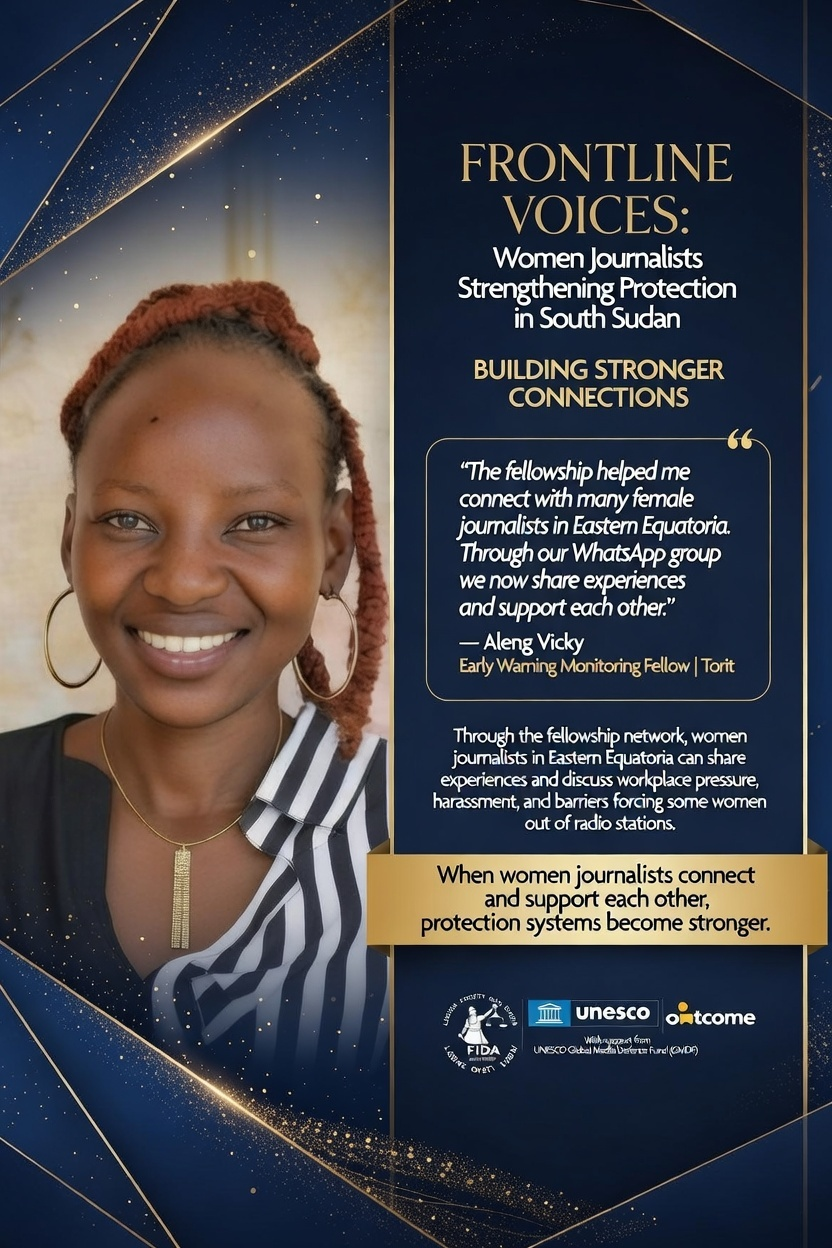
For Aleng Vicky, an Early Warning Monitoring Fellow from Torit, the fellowship created new opportunities to connect with female journalists across Eastern Equatoria, reports DEBORAH YAR.
Before joining the program, she says many women journalists worked in isolation, rarely interacting with colleagues outside their immediate workplaces.
“Through the fellowship we created a WhatsApp group for female journalists,” Vicky explains. “This made it easier for us to connect and share our experiences.”
The platform allowed participants to identify active members and discuss challenges affecting female journalists in their region.
Understanding Shared Challenges
Through these discussions, Vicky gained deeper insight into the difficulties many female journalists face in the profession.
Some women, she says, hesitate to report workplace harassment or abuse because they fear losing their jobs.
“The forum helped me understand why many female journalists leave radio stations,” she says. “Some fear speaking out about harassment because they worry it might cost them their positions.”
By sharing experiences and advice, participants were able to discuss ways to address these challenges and support each other.
Strengthening Communication
The fellowship also helped Vicky improve how she communicates with colleagues across different locations.
She learned how to organize calls and discussions using WhatsApp, allowing journalists from various counties to participate even when they could not meet in person.
“Now I can organize calls and invite others to participate,” she says. “It has helped us stay connected.”
A Growing Professional Network
For Vicky, the fellowship has created a network that extends beyond a single newsroom.
Female journalists who once worked separately are now able to exchange information, discuss professional challenges, and support one another across Eastern Equatoria.
This growing network is helping women journalists strengthen their voices and continue reporting in environments where challenges remain.