

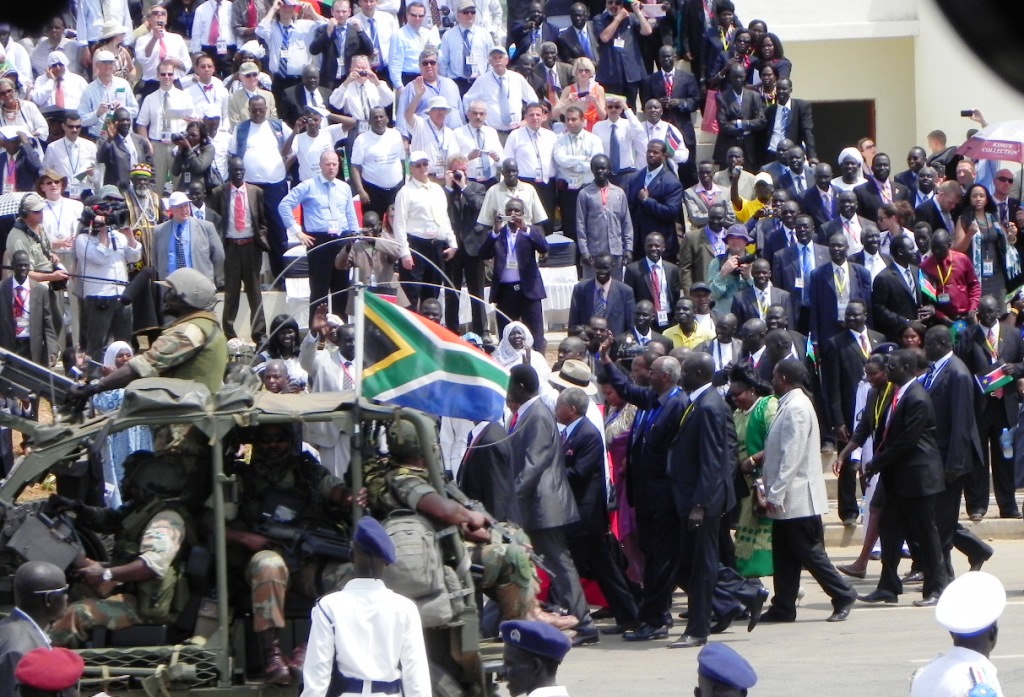
When the Speaker read the Declaration of Independence with a cheery voice, my heart beat anxiously

It was a was spectacular day. I wore a new suit donning our flag and colors, ensured I sat high in the VIP podium, and I refused to be moved so our visitors could have the seat. I was thinking, ‘This is my day – is it my fault that protocol arrived late and allowed us to sit as we pleased?’

ASANTEWAA LO LIYONG

As our Independence Day loomed last week, this town was abuzz with celebration, excitement, and was free of police lockdowns.

Emotions were high in the air, creating a thick cloud that brought rain drops during the week.

In fact, I thought it would rain on D-Day 9th July.

The Republic of South Sudan Independence Day was like no other in the world. The citizens of South Sudan as hosts for the day ensured they arrived earlier than their foreign visitors, which was surprising considering Sudan Standard time is always well Sudan Standard time. However because they were on time (for the first time in history) they managed to occupy the seats prepared for our visitors. Though we were early, protocol, service staff or whomsoever was supposed to direct VIP’s was not at the venue on time. Two hours into the celebrations, we start having sitting problems at the VIP podium. The Vice President had to come and inform South Sudanese visitors to make space for our foreign visitors.

Numerous foreign dignitaries and presidents attended the function yet the MC failed to acknowledge their presence, and we had to squint our eyes and guess who was who when dignitaries arrived. This resulted in heads of state arriving and leaving the New Republic of South Sudan (RSS) without a mention to citizens of South Sudan and the rest of the world.

It was a was spectacular day. I wore a new suit donning our flag and colors, ensured I sat high in the VIP podium. I refused to be moved so our visitors could have the seat. I was thinking, ‘This is my day – is it my fault that protocol arrived late and allowed us to sit as we pleased?’

People looked admirable in their blue suits as they stood the whole morning in single file waiting to welcome our visitors as they arrived to the venue, the perfect cheerleaders for the event.

As the Speaker of Parliament read the declaration of Independence with a cheery voice my heart beat anxiously awaiting the president to take the oath of office. The president was sworn in and jubilations sounded everywhere, the flag of the Republic of South Sudan went up and the flag of Sudan went down. What a memorable and historical moment it was. This is the end of slavery and marginalization, the beginning of peace, justice, equality and prosperity.

Nonetheless with all the blunders, visitors not getting seats or sitting under the sun, not being acknowledged, etc. I accept that this is South Sudan. We are South Sudanese and always expect the unexpected. I think this should be the motto for the new nation “Expect the unexpected”.

Yes I am the Republic of South Sudan and I vow to protect my nation. I vow to correct those who still use the wrong anthem. I vow to correct those who say Southern Sudan instead of South Sudan. I vow to correct those who write the ROSS instead of RSS. I vow to be an ambassador for my Republic. I vow to tell all concerned that I am a South Sudanese first then a Deng, Kuku, Balanda or Latuko…

I am the Republic of South Sudan as I waited anxiously in Diaspora for 14 years, wondering if I will be accepted, if I will belong. I didn’t belong out there and if I don’t belong in South Sudan, where do I belong.  I belong to a nation; I will have a passport that will say I am from the Republic of South Sudan, and I will be using the South Sudanese Pound with the face of Dr. John Garang and our natural resources printed on it. I will sing our national anthem with joy at churches, schools, parties, offices, at home in my heart, wherever and whenever I see fit. We have finally arrived and the world has recognized us. I will walk proudly and tell my brothers and sisters in the North and around the world ‘fadal’ visit anytime for we are a different people we are a people of joy, a people of peace, justice, liberty and prosperity reigns.

I am a first class citizen. This is my country, our country. Not the country of the president, of the SPLM-DC, of the army, of the SPLM, of Shilluk, of the Bagara, of the Toposa, of the Dinka-Bor, of the Kuku. This is our country. The DNA fabric is South Sudan.

But, dear guests, the wedding day is over. The honeymoon will soon follow. We have to put our house in order, make it a comfortable home: where all are equal living in peace and harmony, where each of us, especially our leaders not only preach, but live a united life. Where we are our Republic first, before we are tribes. Let’s vow to protect our Republic. Do whatever is necessary to build the best Republic in the world, united and strong. So help me God.

- A word from our sponsors -

sponsored: GRE. GMAT. TOEFL. IELT CLASSESspot_img

Most Popular

More from section

More Courage Than Before: Female Monitors Strengthening Early Warning Systems in South Sudan

Simona Ali, an Early Warning Monitoring Fellow from Wau, says the fellowship created a space for female journalists to share experiences and learn from each other. By passing this knowledge on to colleagues in her newsroom, she is helping strengthen awareness of journalist safety and professional rights

Speaking Up for Rights: Female Monitors Strengthening Early Warning Systems in South Sudan

Catherine Adut, an Early Warning Monitoring Fellow from Lakes State, says the fellowship helped her understand her rights and speak up against unfair treatment. Today, she encourages other female journalists to report harassment, defend their rights, and support one another in the newsroom.

Confidence to Stand Up: Female Monitors Strengthening Early Warning Systems in South Sudan

Viola Nyoka, an Early Warning Monitoring Fellow from Yei, says the fellowship helped her understand the risks female journalists face and the importance of speaking up. Through shared experiences with colleagues across South Sudan, she gained the confidence to challenge exploitation, report harassment, and stand up for her rights in the newsroom.

Knowing Where to Turn: Female Monitors Strengthening Early Warning Systems in South Sudan

Vivian Nandege, an Early Warning Monitoring Fellow from Yei, says the fellowship helped her understand where to seek support when facing challenges in journalism. Through connections with other female journalists, she has gained confidence, shared knowledge, and built a stronger professional network.

- A word from our sponsors -

spot_img

Read Now

More Courage Than Before: Female Monitors Strengthening Early Warning Systems in South Sudan

Simona Ali, an Early Warning Monitoring Fellow from Wau, says the fellowship created a space for female journalists to share experiences and learn from each other. By passing this knowledge on to colleagues in her newsroom, she is helping strengthen awareness of journalist safety and professional rights

Speaking Up for Rights: Female Monitors Strengthening Early Warning Systems in South Sudan

Catherine Adut, an Early Warning Monitoring Fellow from Lakes State, says the fellowship helped her understand her rights and speak up against unfair treatment. Today, she encourages other female journalists to report harassment, defend their rights, and support one another in the newsroom.

Confidence to Stand Up: Female Monitors Strengthening Early Warning Systems in South Sudan

Viola Nyoka, an Early Warning Monitoring Fellow from Yei, says the fellowship helped her understand the risks female journalists face and the importance of speaking up. Through shared experiences with colleagues across South Sudan, she gained the confidence to challenge exploitation, report harassment, and stand up for her rights in the newsroom.

Knowing Where to Turn: Female Monitors Strengthening Early Warning Systems in South Sudan

Vivian Nandege, an Early Warning Monitoring Fellow from Yei, says the fellowship helped her understand where to seek support when facing challenges in journalism. Through connections with other female journalists, she has gained confidence, shared knowledge, and built a stronger professional network.

Strengthening Professional Networks: Female Monitors Strengthening Early Warning Systems in South Sudan

Cecilia John Akile, an Early Warning Monitoring Fellow from Wau, says the fellowship helped her build stronger professional connections with journalists across South Sudan. Through the network, she has learned the importance of speaking openly about challenges and collaborating with colleagues to find solutions

Standing Firm Under Pressure: Female Monitors Strengthening Early Warning Systems in South Sudan

Assunta Aluel, a journalist from Twic County, says the Monitoring Fellowship helped her remain calm and professional when she faced questioning after reporting a sensitive community story. The training equipped her with the confidence and knowledge to navigate pressure while continuing her work.

Building Stronger Connections: Female Monitors Strengthening Early Warning Systems in South Sudan

Aleng Vicky, an Early Warning Monitoring Fellow from Torit, says the fellowship helped female journalists across Eastern Equatoria connect and share experiences. Through new communication platforms and peer discussions, women journalists are building stronger networks and supporting each other in the profession.

From Connection to Courage: Female Monitors Strengthen Early Warning Systems in South Sudan

"At the back of your mind, when covering news, you must remember there are things you must follow while doing this. That has instilled more confidence in us than before." - ARICH DENG

Forging a Lifeline: Female Monitors Power Early Warning Systems in South Sudan

An early warning system fellowship empowers frontline monitoring fellows to detect risks early, trigger rapid response, and strengthen protection support for those facing threats.

The Mic Was Silenced: A Young Female Journalist Struggles to Reclaim the Airwaves in South Sudan

They shut it down after a song—just a traditional tune from the wrong community—played during a flare-up in local fighting. Officials stormed in, seized the keys, and warned the staff: One more mistake, and the whole station is gone for good. For a moment, Achol was jobless...

 “If You Don’t Have the Heart for It, You Can’t Carry On”

As a child, she fled bombings by the Sudanese government and attacks by the Ugandan rebel Lord’s Resistance Army, living a refugee live in DR-Congo, CAR, and Uganda. As a woman, she faced down militias. Today, she stands at the frontline of media freedom in Western Equatoria...