

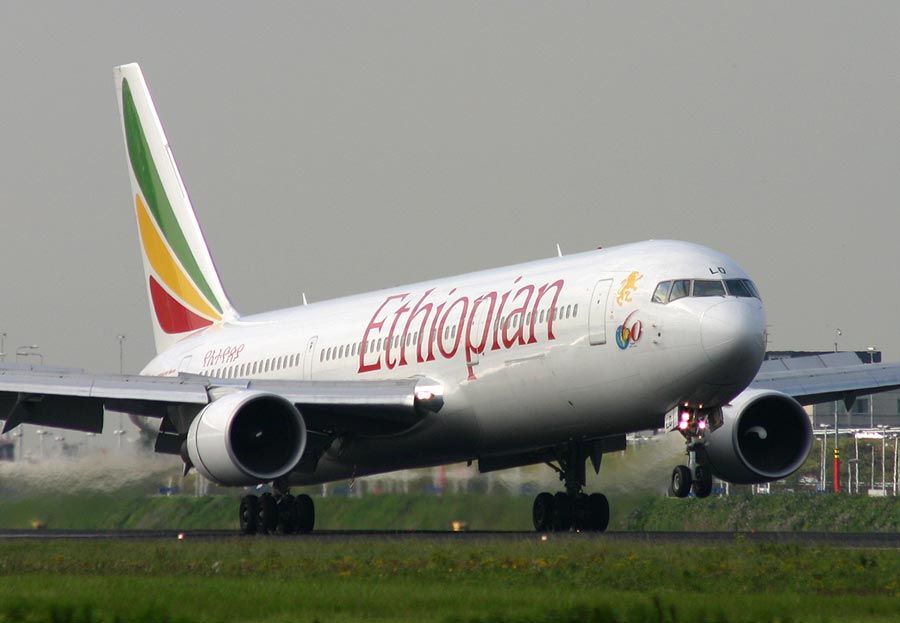
Ethiopia joins the skies as airlines ride the Independence wave

BY ANTHONY K. BOSCO

Correspondent

Anthony covers Eastern Equatoria for New Times

Airlines are cashing in on Independent celebrations, as passengers rush in, fearing the government may increase the number of no-fly days.
This is despite the central government curtailing flights to the south, or travel by badge at Kosti.
In fact, some aviation officials say some flights from Khartoum are fully booked until the July 9.
An airport official in Juba, even suggested to New Times that some flights may stop by July 7th – a whole two days before D-Day.
At Feeder Airline’s Juba Town office, one member of the staff said they are “not working” though a note at the entrance to their office reminded customers to turn up before midday to collect their tickets. Feeder Airlines recently said their planes are undergoing check up.
Information Minister Barnaba Marial Benjamin said last week that flights will continue until July 8, when the Airport will be cleared to receive Independence Day dignitaries, but potential travelers are suspicious and worried they may be stranded on the wrong side of the divide.
“I am unhappy at how authorities are treating us…on the first day we were blocked from entering the port (Mina’a),” a mother in Kosti told New Times by telephone.
Earlier, rumors of a three-day closure of the airport sent would-be-passengers into panic.
Mustafa Ali who by Wednesday flew to Khartoum to visit his family before coming for the celebrations in Juba says, he was prompted to book a return flight for 5th July because people were saying that no flights will leave or land in Juba by 7th July.

“Many people still want to travel around before independence,” Mustafa told New Times. “But when the news came to me that flights would stop by seventh; I had to book two weeks back for a return flight, too.”


The delays at Kosti prompted the Government of Southern Sudan to issue a statement.
Said Barnaba: “We are asking that there are ordinary citizens from Northern Sudan who will try to join us in the celebrations, we are telling them, you are also welcome to attend because this celebration is a celebration of peace not an occasion of war”
The decision by KQ to fly two times a day out of Juba could ease some of the pressure. Already Jetlink flies in and out two times a day. Other major careers include Ethiopian and Air Uganda.
However, the decision to stop flights on July 8 is still giving many airline officials a headache.
Kelly Nyakang, a reservations and ticketing officer at Air Uganda Juba said the day suspension would affect their customers. Customers may have to make advance bookings and suspend some journeys.
Some don’t see any serious impact – after all, independence celebrations mean people will be stationery in Juba, celebrating.
“It comes as a relief though such suspension may not affect seriously,” Kagwa Jonas, said as he awaited his flight out of Juba.

“It is likely that on that day shops will be closed and every body will be celebrating the birth of the new nation. I am sure that even on that day, nobody will have the strength to stay doing business as it will be a day for people to celebrate.”

- A word from our sponsors -

sponsored: GRE. GMAT. TOEFL. IELT CLASSESspot_img

Most Popular

More from section

More Courage Than Before: Female Monitors Strengthening Early Warning Systems in South Sudan

Simona Ali, an Early Warning Monitoring Fellow from Wau, says the fellowship created a space for female journalists to share experiences and learn from each other. By passing this knowledge on to colleagues in her newsroom, she is helping strengthen awareness of journalist safety and professional rights

Speaking Up for Rights: Female Monitors Strengthening Early Warning Systems in South Sudan

Catherine Adut, an Early Warning Monitoring Fellow from Lakes State, says the fellowship helped her understand her rights and speak up against unfair treatment. Today, she encourages other female journalists to report harassment, defend their rights, and support one another in the newsroom.

Confidence to Stand Up: Female Monitors Strengthening Early Warning Systems in South Sudan

Viola Nyoka, an Early Warning Monitoring Fellow from Yei, says the fellowship helped her understand the risks female journalists face and the importance of speaking up. Through shared experiences with colleagues across South Sudan, she gained the confidence to challenge exploitation, report harassment, and stand up for her rights in the newsroom.

Knowing Where to Turn: Female Monitors Strengthening Early Warning Systems in South Sudan

Vivian Nandege, an Early Warning Monitoring Fellow from Yei, says the fellowship helped her understand where to seek support when facing challenges in journalism. Through connections with other female journalists, she has gained confidence, shared knowledge, and built a stronger professional network.

- A word from our sponsors -

spot_img

Read Now

More Courage Than Before: Female Monitors Strengthening Early Warning Systems in South Sudan

Simona Ali, an Early Warning Monitoring Fellow from Wau, says the fellowship created a space for female journalists to share experiences and learn from each other. By passing this knowledge on to colleagues in her newsroom, she is helping strengthen awareness of journalist safety and professional rights

Speaking Up for Rights: Female Monitors Strengthening Early Warning Systems in South Sudan

Catherine Adut, an Early Warning Monitoring Fellow from Lakes State, says the fellowship helped her understand her rights and speak up against unfair treatment. Today, she encourages other female journalists to report harassment, defend their rights, and support one another in the newsroom.

Confidence to Stand Up: Female Monitors Strengthening Early Warning Systems in South Sudan

Viola Nyoka, an Early Warning Monitoring Fellow from Yei, says the fellowship helped her understand the risks female journalists face and the importance of speaking up. Through shared experiences with colleagues across South Sudan, she gained the confidence to challenge exploitation, report harassment, and stand up for her rights in the newsroom.

Knowing Where to Turn: Female Monitors Strengthening Early Warning Systems in South Sudan

Vivian Nandege, an Early Warning Monitoring Fellow from Yei, says the fellowship helped her understand where to seek support when facing challenges in journalism. Through connections with other female journalists, she has gained confidence, shared knowledge, and built a stronger professional network.

Strengthening Professional Networks: Female Monitors Strengthening Early Warning Systems in South Sudan

Cecilia John Akile, an Early Warning Monitoring Fellow from Wau, says the fellowship helped her build stronger professional connections with journalists across South Sudan. Through the network, she has learned the importance of speaking openly about challenges and collaborating with colleagues to find solutions

Standing Firm Under Pressure: Female Monitors Strengthening Early Warning Systems in South Sudan

Assunta Aluel, a journalist from Twic County, says the Monitoring Fellowship helped her remain calm and professional when she faced questioning after reporting a sensitive community story. The training equipped her with the confidence and knowledge to navigate pressure while continuing her work.

Building Stronger Connections: Female Monitors Strengthening Early Warning Systems in South Sudan

Aleng Vicky, an Early Warning Monitoring Fellow from Torit, says the fellowship helped female journalists across Eastern Equatoria connect and share experiences. Through new communication platforms and peer discussions, women journalists are building stronger networks and supporting each other in the profession.

From Connection to Courage: Female Monitors Strengthen Early Warning Systems in South Sudan

"At the back of your mind, when covering news, you must remember there are things you must follow while doing this. That has instilled more confidence in us than before." - ARICH DENG

Forging a Lifeline: Female Monitors Power Early Warning Systems in South Sudan

An early warning system fellowship empowers frontline monitoring fellows to detect risks early, trigger rapid response, and strengthen protection support for those facing threats.

The Mic Was Silenced: A Young Female Journalist Struggles to Reclaim the Airwaves in South Sudan

They shut it down after a song—just a traditional tune from the wrong community—played during a flare-up in local fighting. Officials stormed in, seized the keys, and warned the staff: One more mistake, and the whole station is gone for good. For a moment, Achol was jobless...

 “If You Don’t Have the Heart for It, You Can’t Carry On”

As a child, she fled bombings by the Sudanese government and attacks by the Ugandan rebel Lord’s Resistance Army, living a refugee live in DR-Congo, CAR, and Uganda. As a woman, she faced down militias. Today, she stands at the frontline of media freedom in Western Equatoria...