

HomeNEW REPUBLIC.We Sing about Peace,...

We Sing about Peace, but after Independence, It’ll be Love Songs

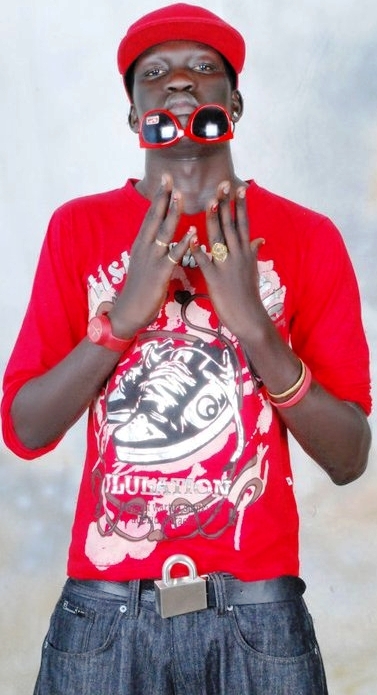
One day, his father was the guest of honor at an occasion in Nimule where Dan Jolying was the guest singer. Jolying crooned and sent the crowds into a fit, cheering and singing along. The father was surprised; His son was not named Dan Jolying, but this person singing was his son. after excommunicating him, the father endorsed his son’s talent.

MABIOR PHILIP MACH


Q. Why Jolying, as in, stage name?

You know, in our culture, in our tribe our people don’t allow us to be in music industry. So when you try to do something, you have to hide it a bit so that family doesn’t find out. So I kept my self-known as Dan Jolying because if my father hears of Dan Jolying he would not know that I am the one.

By hiding your real name, aren’t you denying yourself support from those who like your music?
Actually, when you start something, you try to, maybe, do another first thing and then give out the real after. By the time I started music, I first did it for two years without my dad knowing my name. I first advertised my name and so when my father came to know about it, I was already in music. Dan Jolying is my popular name and they don’t know my real name.

Q. Now your father knows your stage name?

Right. They definitely know that I am Dan Jolying and there is no way they can refer to me by my family name. They now call me Dan Jolying.

Q.Do you still face any resistance from parents?
Exactly/ You know when I began it for them they did not want what I was doing. But when they came to realize that music is life: I sing. I make people happy. They now understand that I have talent. I have chosen this career.

Who are you?
I was born in Torit County, New Sudan. I am from Jonglei. I started my primary in Lobone. I finished my high school in Makerere Business Institute (MBI), studying journalism.

You are a musician, and studying to become a journalist. Which is your way?
Music is a talent and my career is journalism. But you can make music a career if you have someone supporting you.

Do you have people who support you and your music?
My aunt in Kenya, Athiang Riak Bai. There are people supporting me. I have that hope that one time one day I will become an international star.

But you proceeded with music against your parent’s wishes?
Music is a talent as I told you. I have been in music industry since 2007. It is a talent. I cannot hide it; I had to expose it.

What inspired you?
You know music started with our grandparents and all these. My uncle late Angeth Abooric inspired me. He was well into music. And if he has gone, I have to fill his gap, do for him what he would have done.

What music do you perform?
Hip-hop, Dancer, Reggae, Raga Tone, Rock and Blues.

Which do you do best?
I am good in Dancer.

Where were you as a refugee?
I was at first in a displaced people’s camp and then I became a refugee in Kitgum.

How did you find life in an IDP or refugee camp?
Lobone was all about hustling.

I was a kid, so I was in the care of my parents and they took care of me a lot. They did everything to me. And in Kitgum, I was independent. I lived my life. Things were better.

What do you want to be in future?
A bigger music star. I cannot be a politician. I hate politics.

What message do your songs carry?
The industry is down. We don’t have promoters to support us.

We hustle for our lyrics. We don’t want to let music down. I usually tell my fellow artists that we should keep music alive for our nation. We sing so that people can come to know what we are doing. Some think we are jokers. Right now if they find you at night with dreadlocks and you say you are an artist, they manhandle you. Sometimes you hire venues but make losses. We don’t mind. We just want the message out.

Do you have any role in peace building particularly in your state, Jonglei, and South Sudan as a whole?

We are singing about peace. Maybe after independence we will sing love songs. But right now, the message is let’s build peace. There is a new song I have. It goes like, “It is the nation that we have been waiting for”. The song is on air. They play it at 98.6 SRS FM, my radio station. We have been fighting for long and now we have gained what we were fighting for –the Republic of South Sudan.

IN OTHER BRIEFS

UN Radio brings … hurray! It’s the pulse of a new nation

There’s a new sensation in town. Folks at Miraya FM tells us they have launched something new, something peculiar. And it is ‘the pulse of a new nation’. Said they in a statement: “Radio Miraya will accompany the creation of the new state in South Sudan with programmes on human development, provision of services, human rights, human security, reconciliation, and economic development. As always, the programmes will be delivered along with a healthy dose of music and entertainment.
“Throughout the day Miraya serves up News Headlines, Summaries and Bulletins in English and Simple Arabic, plus Current Affairs, Human social needs and entertainment programmes,
magazines and debates.

“Some new things you’ll hear on Radio Miraya include “Solvers” – where listeners can call in their problems and we’ll find an expert to help find a solution.

There’s also “Missives from the North” – a show about Southern Sudanese still living in North Sudan after Independence. We’ve also introduced weekend Sports shows with coverage of local, national and international competitions, a Quiz Show, and a Talent Segment, in which aspiring musicians can showcase their work for all of South Sudan to hear.”
And, of course, they tell us that Miraya is a 24-hour, 7 day a week radio operated by the United Nations Mission, supported by Fondation Hirondelle, and funded by Sweden, Germany and Switzerland.

- A word from our sponsors -

sponsored: GRE. GMAT. TOEFL. IELT CLASSESspot_img

Most Popular

More from section

More Courage Than Before: Female Monitors Strengthening Early Warning Systems in South Sudan

Simona Ali, an Early Warning Monitoring Fellow from Wau, says the fellowship created a space for female journalists to share experiences and learn from each other. By passing this knowledge on to colleagues in her newsroom, she is helping strengthen awareness of journalist safety and professional rights

Speaking Up for Rights: Female Monitors Strengthening Early Warning Systems in South Sudan

Catherine Adut, an Early Warning Monitoring Fellow from Lakes State, says the fellowship helped her understand her rights and speak up against unfair treatment. Today, she encourages other female journalists to report harassment, defend their rights, and support one another in the newsroom.

Confidence to Stand Up: Female Monitors Strengthening Early Warning Systems in South Sudan

Viola Nyoka, an Early Warning Monitoring Fellow from Yei, says the fellowship helped her understand the risks female journalists face and the importance of speaking up. Through shared experiences with colleagues across South Sudan, she gained the confidence to challenge exploitation, report harassment, and stand up for her rights in the newsroom.

Knowing Where to Turn: Female Monitors Strengthening Early Warning Systems in South Sudan

Vivian Nandege, an Early Warning Monitoring Fellow from Yei, says the fellowship helped her understand where to seek support when facing challenges in journalism. Through connections with other female journalists, she has gained confidence, shared knowledge, and built a stronger professional network.

- A word from our sponsors -

spot_img

Read Now

More Courage Than Before: Female Monitors Strengthening Early Warning Systems in South Sudan

Simona Ali, an Early Warning Monitoring Fellow from Wau, says the fellowship created a space for female journalists to share experiences and learn from each other. By passing this knowledge on to colleagues in her newsroom, she is helping strengthen awareness of journalist safety and professional rights

Speaking Up for Rights: Female Monitors Strengthening Early Warning Systems in South Sudan

Catherine Adut, an Early Warning Monitoring Fellow from Lakes State, says the fellowship helped her understand her rights and speak up against unfair treatment. Today, she encourages other female journalists to report harassment, defend their rights, and support one another in the newsroom.

Confidence to Stand Up: Female Monitors Strengthening Early Warning Systems in South Sudan

Viola Nyoka, an Early Warning Monitoring Fellow from Yei, says the fellowship helped her understand the risks female journalists face and the importance of speaking up. Through shared experiences with colleagues across South Sudan, she gained the confidence to challenge exploitation, report harassment, and stand up for her rights in the newsroom.

Knowing Where to Turn: Female Monitors Strengthening Early Warning Systems in South Sudan

Vivian Nandege, an Early Warning Monitoring Fellow from Yei, says the fellowship helped her understand where to seek support when facing challenges in journalism. Through connections with other female journalists, she has gained confidence, shared knowledge, and built a stronger professional network.

Strengthening Professional Networks: Female Monitors Strengthening Early Warning Systems in South Sudan

Cecilia John Akile, an Early Warning Monitoring Fellow from Wau, says the fellowship helped her build stronger professional connections with journalists across South Sudan. Through the network, she has learned the importance of speaking openly about challenges and collaborating with colleagues to find solutions

Standing Firm Under Pressure: Female Monitors Strengthening Early Warning Systems in South Sudan

Assunta Aluel, a journalist from Twic County, says the Monitoring Fellowship helped her remain calm and professional when she faced questioning after reporting a sensitive community story. The training equipped her with the confidence and knowledge to navigate pressure while continuing her work.

Building Stronger Connections: Female Monitors Strengthening Early Warning Systems in South Sudan

Aleng Vicky, an Early Warning Monitoring Fellow from Torit, says the fellowship helped female journalists across Eastern Equatoria connect and share experiences. Through new communication platforms and peer discussions, women journalists are building stronger networks and supporting each other in the profession.

From Connection to Courage: Female Monitors Strengthen Early Warning Systems in South Sudan

"At the back of your mind, when covering news, you must remember there are things you must follow while doing this. That has instilled more confidence in us than before." - ARICH DENG

Forging a Lifeline: Female Monitors Power Early Warning Systems in South Sudan

An early warning system fellowship empowers frontline monitoring fellows to detect risks early, trigger rapid response, and strengthen protection support for those facing threats.

The Mic Was Silenced: A Young Female Journalist Struggles to Reclaim the Airwaves in South Sudan

They shut it down after a song—just a traditional tune from the wrong community—played during a flare-up in local fighting. Officials stormed in, seized the keys, and warned the staff: One more mistake, and the whole station is gone for good. For a moment, Achol was jobless...

 “If You Don’t Have the Heart for It, You Can’t Carry On”

As a child, she fled bombings by the Sudanese government and attacks by the Ugandan rebel Lord’s Resistance Army, living a refugee live in DR-Congo, CAR, and Uganda. As a woman, she faced down militias. Today, she stands at the frontline of media freedom in Western Equatoria...